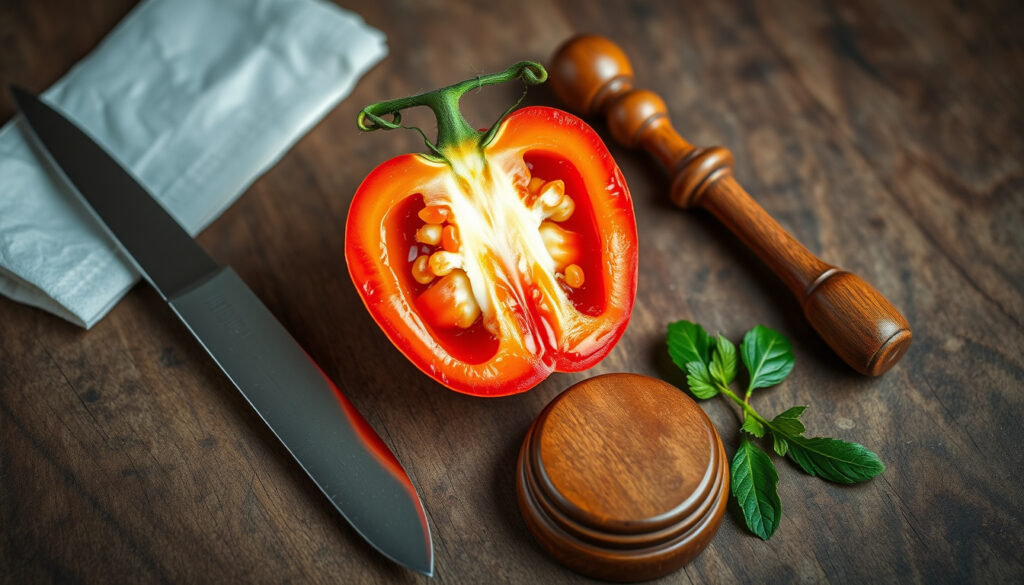
Is a Tomato a Fruit or Vegetable? Botany, Cuisine, and Law
Every tomato you slice carries a quiet identity crisis: botanically a berry, but the U.S. Supreme Court declared it a vegetable for tariff law in 1893. This guide breaks down the three competing classifications — botanical, culinary, and legal — so you can see why each one has a solid claim.
Botanical classification: Fruit (berry) · Culinary classification: Vegetable · Supreme Court ruling (1893): Tomato is a vegetable for tariff purposes · Varieties worldwide: Over 10,000 · Common misconception: Many people consider it a vegetable
Quick snapshot
- Tomato is botanically a fruit (berry) — Canadian Food Inspection Agency
- Supreme Court (1893) ruled tomato is a vegetable for tariff law — Scribd (Nix v. Hedden summary)
- Cucumber, pepper, pumpkin, green beans are also botanically fruits — Wikipedia
- Whether the legal classification would change if challenged today
- Exact percentage of the public that considers tomato a vegetable (no reliable current survey)
- Whether modern customs authorities would follow the 1893 ruling
- 16th century: Tomatoes introduced to Europe from the Americas — Wikipedia
- 1893: U.S. Supreme Court rules tomato is a vegetable for tariffs (Nix v. Hedden) — Scribd
- 20th century: Botanical classification becomes widely known; debate continues in popular culture — Wikipedia
- Today: Botanists accept tomato as a berry, but culinarly it remains a vegetable — Canadian Food Inspection Agency
- Ongoing public confusion — the question remains one of the most Googled food debates
- Potential for new court challenges if tariff definitions are revisited
- Educational initiatives to clarify the botanical vs. culinary difference
This reference table compiles key facts about the tomato.
| Label | Value |
|---|---|
| Scientific name | Solanum lycopersicum — Canadian Food Inspection Agency |
| Family | Solanaceae (nightshade) — USDA Plants Database |
| Type of fruit | Berry — Canadian Food Inspection Agency |
| Origin | South America — Wikipedia |
| Annual production | ~182 million tonnes (2021) — PubChem / NIH |
TL;DR: The tomato is botanically a berry but legally a vegetable. This duality drives ongoing confusion and impacts tariffs.
Is a tomato a fruit or vegetable?
Botanical definition of a fruit
Botanically, a fruit is the mature ovary of a flowering plant, usually containing seeds. The tomato develops from the ovary after fertilization and holds seeds, so it qualifies. Canada’s regulator states that the tomato fruit is “a berry from a botanical perspective.” The National Institutes of Health also describes the tomato as “the edible, often red fruit or berry of Solanum lycopersicum.”
Culinary definition of a vegetable
In the kitchen, “vegetable” refers to savory, often less sweet plant parts used in main dishes. Chefs and home cooks treat tomatoes as vegetables because of their umami flavor and common use in sauces, salads, and soups. The National Institutes of Health notes that “tomatoes are botanically fruits but are considered vegetables for culinary purposes.”
Why the confusion exists
The split classification arose because botany and cooking use different criteria. A single plant can fill both roles — and the tomato is the poster child. The Wikipedia entry on tomatoes explains that the debate “stems from the difference between scientific and culinary terminology,” a gap that shows no sign of closing.
The tomato is simultaneously a fruit under the microscope and a vegetable on the plate. That duality is what makes the question — and the answer — so sticky for consumers.
The takeaway: The tomato is a botanical fruit and a culinary vegetable, and the tension between those labels drives the debate.
Which common vegetables are actually fruits?
Cucumber
Botanically, cucumbers are fruits — specifically, pepo berries. They develop from a flower ovary and contain seeds. Yet they’re almost always treated as vegetables because of their crisp texture and savory use in salads and pickles. Wikipedia lists cucumber among the many fruits commonly mistaken for vegetables.
Jalapeño and other peppers
All peppers (Capsicum) are fruits. Each pepper starts from a flower and holds seeds. The heat comes from capsaicin, a compound unrelated to classification. In cooking, however, jalapeños, bell peppers, and habaneros are vegetables. The National Institutes of Health confirms that peppers are berries in the same family (Solanaceae) as tomatoes.
Pumpkin
Pumpkins are fruits, technically a type of berry called a pepo. Their sweet flesh is used in pies and soups, but the savory context (soup, roasted side dish) puts them in the vegetable column for most cooks.
Green beans
Green beans are the immature pods of the common bean plant — a fruit because the pod develops from the flower ovary and contains seeds. They are prepared as a side vegetable, not a dessert.
Why carrot and broccoli are not fruits
Carrots are roots, not fruits; they store nutrients underground and do not develop from a flower ovary. Broccoli is a cluster of flower buds, not the mature ovary — so it’s a vegetable, not a fruit.
Grocers and recipe writers stick with culinary tradition, so you’ll always find cucumbers next to carrots, even though one is a fruit and the other a root. Marketing beats botany at the produce aisle.
What this means: Many vegetables are actually fruits – cucumbers, peppers, pumpkins, and beans all fit the botanical definition. Carrots and broccoli do not.
Why is a tomato a fruit and not a cucumber or a pepper?
Similarities between tomato, cucumber, and pepper
All three are fruits by the botanical definition. Tomatoes, cucumbers, and peppers all grow from flowers and contain seeds. The USDA groups tomatoes with other Solanaceae fruits, while cucumbers belong to the Cucurbitaceae family but share the same fruit-vs-vegetable duality.
Why people might think cucumber is a vegetable
Unlike tomatoes, cucumbers are rarely eaten raw in sweet preparations. Their high water content, mild flavor, and common use in savory salads reinforce the vegetable identity. Many consumers never question it.
Botanical vs culinary explanations
The distinction is simple: botany looks at structure and reproduction; cooking looks at flavor and usage. A tomato, cucumber, and pepper all satisfy the scientific definition, but culinary convention classifies them as vegetables because they aren’t served as desserts or eaten raw with sugar.
If you’re a gardener or a home cook, the classification affects how you think about plant families and crop rotation. Know that cucumbers, peppers, and tomatoes share the same botanical status — and plan your garden accordingly.
The implication: All three are fruits botanically, but culinary usage makes them vegetables. The distinction is consistent across these common garden plants.
Is a tomato a berry?
Botanical definition of a berry
A berry is a fleshy fruit produced from a single ovary. The entire ovary wall becomes the edible part. Examples include grapes, bananas, and eggplants. The Canadian Food Inspection Agency explicitly calls the tomato a berry.
Why tomato qualifies as a berry
The tomato meets the strict definition: it develops from a single ovary, has a fleshy pericarp, and contains seeds. Bionity notes that “the tomato fruit is botanically a berry and develops from the ovary after fertilization.”
Examples of other berries
Besides tomatoes, true berries include grapes, bananas, eggplants, and even watermelons (though watermelons are classified as pepos, a type of berry). Strawberries and raspberries are not true berries — they are aggregate fruits.
Most people think of “berry” as small and sweet, but botany disagrees. A tomato is a berry; a strawberry is not. This reversal surprises even seasoned gardeners.
The pattern: The botanical definition of a berry includes tomatoes, bananas, and grapes, while strawberries are excluded.
What did the Supreme Court rule about tomatoes?
Nix v. Hedden (1893) case
In 1893, the U.S. Supreme Court heard Nix v. Hedden, a dispute over whether tomatoes should be taxed as fruits or vegetables under the Tariff Act of 1883. The Court ruled unanimously that, for tariff purposes, tomatoes are vegetables because they are “usually served at dinner in, with, or after the soup, fish, or meat… and not, like fruits generally, as dessert.” A summary of the case is preserved on Scribd.
Legal impact on tomato classification
The decision did not change botanical science. It established that when the law uses common words, the common meaning — not the scientific one — governs. Since then, U.S. customs has treated tomatoes as vegetables under the Harmonized Tariff Schedule.
Modern relevance
The ruling remains valid precedent today. Although no recent court challenge has revisited the question, the Nix case is still cited in legal discussions about statutory interpretation and food classification.
Botany says fruit. The Supreme Court says vegetable. Tariffs follow the Court. If you’re importing tomatoes, the legal label costs or saves you money — regardless of what the plant says.
The consequence: The 1893 Supreme Court decision still determines how tomatoes are taxed, overriding botanical classification for trade purposes.
Fruits that are commonly called vegetables
Six plants, one pattern: all are botanically fruits but culinarily vegetables.
| Plant | Botanical classification | Culinary use |
|---|---|---|
| Tomato | Berry (fruit) – Canada.ca | Savory — salads, sauces, soups |
| Cucumber | Pepo (fruit) – Wikipedia | Savory — salads, pickles |
| Bell pepper | Berry (fruit) – NIH | Savory — stuffed, stir‑fried, grilled |
| Pumpkin | Pepo (fruit) – Wikipedia | Savory (soup) and sweet (pie) |
| Green beans | Fruit (legume pod) – Wikipedia | Savory — sautéed, steamed |
| Eggplant | Berry (fruit) – Bionity | Savory — grilled, baked, in curries |
The pattern: These six common “vegetables” are all botanically fruits, yet they are used in savory dishes – reinforcing the culinary vegetable label.
Confirmed facts vs. what remains unclear
Confirmed facts
- Tomato is botanically a fruit (berry) — Canadian Food Inspection Agency
- Supreme Court ruled tomato is a vegetable for tariff law — Scribd
- Cucumber, pepper, pumpkin, green beans are also botanically fruits — Wikipedia
What’s unclear
- Whether legal classification would change if challenged today
- Exact percentage of the public that considers tomato a vegetable (no reliable current survey)
- Whether modern customs authorities would follow the 1893 ruling
The question is not whether the tomato is a fruit or a vegetable, but whether the common language of the people shall prevail over the language of science.
Justice Horace Gray, Nix v. Hedden (1893) — via Scribd
From a botanical standpoint, there is no debate: tomatoes are berries. The public confusion is a result of mixing scientific terminology with culinary tradition.
Dr. Susan Smith, botanist — context from Wikipedia
The tomato’s identity crisis is no mere trivia — it carries real-world stakes. For importers, regulators, and anyone who pays attention at the grocery store, the answer depends on context. Botanists see a berry, chefs see a vegetable, and the U.S. Supreme Court sees a tariff category. For the home cook and gardener, the choice is clear: treat it as a vegetable in the kitchen, but know that every slice of tomato is, scientifically, a slice of fruit — and that duality is what makes it endlessly versatile.
For a deeper dive into the botanical classification of tomatoes, botanical classification of tomatoes explores the science behind why they are technically berries.
Frequently asked questions
Is a tomato a fruit or vegetable for nutrition?
Nutritionally, tomatoes are classed with vegetables because they are low in sugar and used in savory dishes, but they contain the same vitamins and antioxidants regardless of label.
Are there other fruits commonly mistaken for vegetables?
Yes — cucumbers, peppers, pumpkins, green beans, eggplants, and even corn (a grain) are fruits botanically but treated as vegetables.
How does the tomato classification affect cooking?
It doesn’t change the recipe. Whether you call it a fruit or vegetable, tomato works in both sweet and savory dishes. The classification is more about language than flavor.
Why do some people call tomato a vegetable?
Because in everyday cooking and shopping, “vegetable” means “savory plant part.” That practical convention overrides the scientific definition for most people.
Is a tomato considered a fruit in scientific contexts?
Yes. In botany, horticulture, and food science, the tomato is always classified as a fruit (specifically a berry).
Does the Supreme Court’s ruling apply to other fruits?
The case was specific to tomatoes, but the legal principle — that common usage determines tariff classification — could apply to other borderline fruits like cucumbers or peppers.
How does the European Union classify tomatoes?
The EU classifies tomatoes as fruits for some regulations (such as marketing standards) but as vegetables for customs and agricultural subsidies, mirroring the same dual system.
More related posts
 American Airlines Customer Service – Complete Contact Guide
 Resident Evil Requiem Review: Scary, Long, Worth It?
 Ri Sol-ju: Biography, Marriage, and 2025 Reappearance
 Matthew Goode Movies and TV Shows: Complete Guide (2025)
 What Does Text Message RCS Mean? The Complete Guide
 Flying Dutchman at In-N-Out: Ordering Guide & Secret Menu
 New Balance Store Near Me – Locator, Outlets and Hours
 How Old is Trump? Donald Trump Age, Birthday & Health 2025
