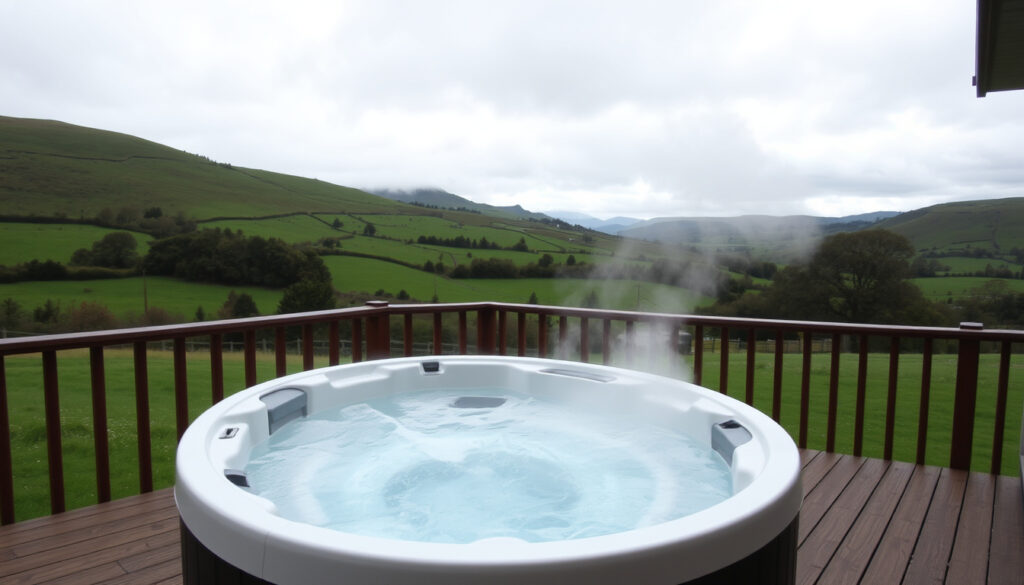
Hot Tubs for Sale in Ireland: A Complete Buying Guide
You’ve probably seen them in neighbours’ gardens or pop up on DoneDeal — hot tubs are having a moment in Ireland. But before you start shopping, there’s more to consider than just the price tag.
Average monthly electricity cost: $30-$50 ·
Average lifespan: 5-10 years ·
Common problems: Heater failure, pump issues, leaks ·
Price range in Ireland: €500 – €15,000
Quick snapshot
- Hot tubs require regular maintenance (Aquasun Ireland, specialist supplier)
- Electricity cost is a significant ongoing expense (Aquasun Ireland)
- Exact cost savings from insulation upgrades
- Long-term health benefits beyond relaxation
- Growing demand in Ireland with prices ranging from €500 to €29,950 (Aquasun Ireland)
- Compare inflatable vs hard-shell, factor in installation costs, and check local dealers
Four key facts at a glance: the table below distills the most critical numbers for Irish buyers.
| Factor | Value |
|---|---|
| Average price in Ireland | €500 – €15,000 |
| Monthly electricity cost | €30–€50 |
| Lifespan | 5–10 years |
| Common problems | Heater, pump, leaks |
Is owning a hot tub worth it?
What are the downsides of owning a hot tub?
- High upfront cost — from €500 for inflatable to over €29,950 for premium hard-shell (Aquasun Ireland, specialist retailer)
- Ongoing electricity bills of $30–$50 per month
- Regular maintenance (water chemistry, cleaning, filter changes)
- Potential repairs: heater failure, pump issues, leaks (Atlantic Leisure, Dublin hot tub dealer)
What are the benefits of a hot tub?
- Relaxation and stress relief
- Muscle and joint pain relief, improved sleep
- Social and family enjoyment in your garden
- Year-round use, especially appealing in Ireland’s climate
The real question isn’t whether hot tubs are enjoyable — they are. It’s whether the combined cost of purchase, electricity, and maintenance fits your budget. For many Irish households, the decision comes down to how often you’ll actually use it.
The implication: Hot tubs are a lifestyle purchase, not a financial investment. If you value regular relaxation and can absorb the running costs, they’re worth it. Otherwise, the ongoing expenses may outweigh the benefits.
How much electricity does a hot tub use and what is the cost?
Do hot tubs use a lot of electricity?
- Typical hot tub consumes 1,500–6,000 kWh per year (Aquasun Ireland, energy guide)
- Average monthly cost: $30–$50 (€27–€45) depending on local rates and insulation
- Larger hot tubs with more jets use more energy
How much does it cost to run a hot tub for 3 days?
- Assuming a 2 kW heater running 12 hours/day: 72 kWh over 3 days
- At Irish electricity prices (~€0.25/kWh), that’s about €18 for 3 days of continuous heating
- Actual cost varies with set temperature, insulation, and cover quality
A hot tub can add €30–€50 to your monthly electricity bill. In Ireland’s current energy market, that’s a significant extra cost — equivalent to a small appliance running constantly. Good insulation and a tight cover can cut that by 20%–30%.
The pattern: Electricity is the silent budget killer. Buyers often focus on the purchase price and forget the running cost. A well-insulated hot tub with a thermal cover makes a big difference.
What are common hot tub problems?
How to fix common hot tub issues
- Heater failure: Check for scale buildup, replace element if needed (Elite Spa Gardens, hot tub retailer)
- Pump issues: Listen for unusual noises, clean or replace impeller
- Leaks: Inspect seals, hoses, and fittings — tighten or replace
- Water chemistry problems: Test pH and sanitizer levels weekly
When to call a professional
- If electrical components fail (heater, pump motor)
- If leaks persist after basic troubleshooting
- If error codes appear on the control panel
- Annual professional servicing is recommended
The catch: Many small issues can be fixed with basic DIY skills, but water chemistry and electrical problems often need a specialist. Budget for occasional repairs.
How many hours a day should I run my hot tub?
How often to run your hot tub
- 8–12 hours per day is typical for filtration cycles
- Run the pump at least twice daily to filter and circulate water
- Use a timer to align with off-peak electricity rates if available
Best practices for energy efficiency
- Lower the temperature by 5–10°C when not in use for extended periods
- Invest in a good thermal cover (WhatsWhat Ireland, hot tub accessories)
- Insulate the cabinet and base
- Consider a heat pump for more efficient heating
What this means: You don’t need to run the hot tub 24/7. Smart scheduling and insulation can cut electricity use by 30%–40%.
How much do hot tubs cost in Ireland?
What is the price range for hot tubs in Ireland?
- Inflatable hot tubs: €399 – €1,185 (Very Ireland, Intex range)
- Mid-range hard-shell: €3,500 – €14,000 (Atlantic Leisure, Dublin hot tub dealer)
- Premium hard-shell: €14,000 – €29,950 (Aquasun Ireland, premium supplier)
- Wooden hot tubs: from €2,655 (WhatsWhat Ireland)
Where to buy hot tubs in Ireland?
- Online marketplaces: DoneDeal, Expondo, Very Ireland
- Specialist retailers: Aquasun Ireland, Atlantic Leisure, Elite Spa Gardens, H2O Hot Tubs Ireland
- Local dealers: Douglas Forest & Garden, Timber Kit Buildings
- Second-hand options on DoneDeal — but inspect carefully
Nine price bands, one pattern: Inflatable models are the cheapest entry point, but hard-shell hot tubs offer better insulation, durability, and resale value. The biggest jump is from inflatable (under €1,200) to entry-level hard-shell (around €3,500).
Two common hot tub types, one clear difference: inflatable models are easy to move and cheap, while hard-shell models offer better insulation and longevity.
| Specification | Inflatable (e.g. Intex) | Hard-shell (e.g. Aquasun TG2) |
|---|---|---|
| Price range | €399 – €1,185 | €3,500 – €29,950 |
| Seating capacity | 2–4 persons | 4–8 persons |
| Heater power | ~1.5 kW | 2–3 kW |
| Pump | Integrated pump/filter | Separate 1–2 HP pump |
| Electricity use (annual) | 1,500–3,000 kWh | 3,000–6,000 kWh |
| Installation | Plug-and-play | Hardwired, needs electrician |
| Lifespan | 3–5 years | 5–10 years |
| Insulation | Basic (air pockets) | High-density foam |
Sources: Very Ireland, general hot tub range, Aquasun Ireland (TG2 model), Atlantic Leisure
The pattern: Across all price points, the trade-off between upfront cost and ongoing expenses remains consistent.
Upsides and downsides of hot tubs
Upsides
- Relaxation and stress relief
- Muscle and joint pain relief
- Social enjoyment with family and friends
- Year-round use, even in Irish weather
- Can increase property value (hard-shell models)
Downsides
- High upfront cost (€500–€29,950)
- Ongoing electricity cost ($30–$50 per month)
- Regular maintenance (water chemistry, cleaning)
- Potential repair costs (heater, pump, leaks)
- Space required in garden
- May require planning permission in some areas
Confirmed facts vs what’s unclear
Confirmed facts
- Hot tubs require regular maintenance (Aquasun Ireland, specialist supplier)
- Electricity cost is a significant ongoing expense (Aquasun Ireland, energy guide)
- Prices in Ireland range from €500 for inflatable to over €29,950 for premium hard-shell (Atlantic Leisure, Dublin hot tub dealer)
- Common problems include heater failure, pump issues, and leaks (Elite Spa Gardens, hot tub retailer)
What’s unclear
- Exact cost savings from insulation upgrades
- Long-term health benefits beyond relaxation and muscle relief
- Resale value trends for used hot tubs in Ireland
- Exact electricity cost variations across different Irish suppliers
Expert perspectives
“Our hot tub range in Dublin varies from €7,000 to €14,000, offering a good middle ground for Irish buyers.”
— Atlantic Leisure, Dublin-based hot tub dealer
“We list premium hot tubs from €6,600 to €29,950, with models like the Hot Spot Relay at €12,750 and the Prism at €29,950.”
— Aquasun Ireland, specialist hot tub supplier
“Our Intex inflatable spas range from about €989.99 to €1,185, making them the most affordable entry point for Irish households.”
— Very Ireland, online retailer
The message from the market is clear: Irish buyers have a wide spectrum of choices, from budget inflatable to luxury built-in. The key is matching your budget and usage expectations.
Summary
Hot tubs in Ireland range from a few hundred euros for a basic inflatable to nearly €30,000 for a top-tier hard-shell model. The real cost, however, is in the electricity and maintenance. For the casual user, an inflatable may suffice, but if you plan to use it year-round, a well-insulated hard-shell hot tub will save money in the long run. For Irish buyers, the choice is clear: either invest in a quality hard-shell with good insulation, or accept that the cheaper inflatable will come with higher running costs and a shorter lifespan.
douglasforestandgarden.ie, atlanticleisure.ie, expondo.ie, timberkitbuildings.ie, aquasun.ie
Frequently asked questions
Do I need a permit to install a hot tub in Ireland?
In most cases, a hot tub is considered a garden structure and does not require planning permission if it’s under a certain size. However, if it’s a permanent installation with a foundation, you may need to check with your local council. Always consult your local planning authority.
Can I use a hot tub in winter?
Yes, most hot tubs are designed for year-round use, including Irish winters. In fact, using a hot tub in cold weather is a popular experience. Ensure the cover is well-insulated and the water chemistry is maintained to prevent freezing.
How often should I change the water?
Generally, you should change the water every 3–4 months, depending on usage. More frequent use may require more frequent changes. Regular water testing helps determine when it’s time.
What chemicals are needed for a hot tub?
You’ll need a sanitiser (chlorine or bromine), pH increaser/decreaser, alkalinity increaser, and a shock treatment. Many retailers sell starter kits. Test strips are essential for monitoring levels.
How long does a hot tub last?
Inflatable hot tubs typically last 3–5 years. Hard-shell models can last 5–10 years or more with proper maintenance. Premium models with good insulation and quality components can exceed 10 years.
Is a hot tub a good investment?
Financially, a hot tub rarely recovers its cost when selling a property. However, as a lifestyle investment for relaxation and health, many owners find it worthwhile. Consider it a purchase for enjoyment, not profit.
How to winterize a hot tub?
If you won’t use the hot tub in winter, drain it completely, clean the shell, blow out the pipes, and add antifreeze designed for hot tubs. Cover it securely. For year-round use, simply maintain the temperature above 10°C.
Related reading
- Ray‑Ban Meta Glasses Ireland: Prices, Gen 2 & Buying Guide
- TV Stand with Fireplace: Best Picks & Buying Guide
More related posts
 Anonymous Instagram Story Viewer: Top Tools & Risks 2025
 ASAP Rocky Net Worth 2025: Vs Rihanna and Top Rappers
 How Old Is Judge Judy? Age, Biography, Net Worth
 What Is an Annuity? How It Works, Types, Pros & Cons (2025 Guide)
 Flying Dutchman at In-N-Out: Ordering Guide & Secret Menu
 my roommate i a gumiho
 Spotify Web Player: Features, Benefits & How-To
 How Many Days Until May 23? 21-Day Live Countdown 2026
