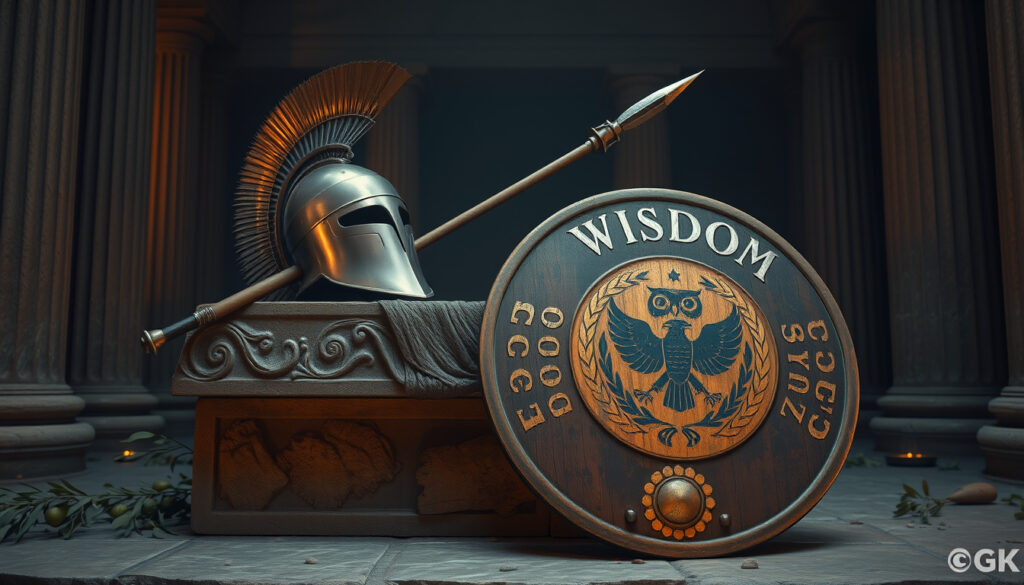
Greek God of War: Ares, Athena, and the Myths Behind Them
The Greek god of war is Ares, but that’s not the whole story—Athena, the goddess of wisdom, also held a powerful domain over warfare, just a very different kind. Let’s sort out who’s who and why it still matters.
Primary Greek god of war: Ares ·
Secondary war deity: Athena (strategic warfare) ·
Roman counterpart: Mars ·
Parents: Zeus and Hera ·
Sacred animals: Vulture, dog ·
Ares’ position: One of the Twelve Olympians
Quick snapshot
- Ares is the Greek god of war and one of the 12 Olympians (Britannica Kids (student reference))
- Athena is also a war deity, representing strategic warfare (Greek Mythology Guide (comparative mythology resource))
- Whether Ares was widely worshipped or feared in ancient Greece (Ancient Origins (mythology history site))
- The exact origin of the name “Ares” remains debated (Ancient Origins (mythology history site))
- Ares appears in Homer’s Iliad (8th century BCE) as a central war figure (Britannica Kids (student reference))
- Ongoing scholarly work continues to explore how Ares and Athena shaped ancient Greek attitudes toward war
| Attribute | Ares | Athena |
|---|---|---|
| Domain | War, violence, bloodshed | Wisdom, strategy, warfare (civilized, defensive) |
| Parents | Zeus and Hera | Zeus and Metis |
| Roman equivalent | Mars | Minerva |
| Symbols | Spear, helmet, vulture, dog | Owl, olive tree, aegis, spear, helmet |
| Sacred animals | Vulture, dog | Owl |
| Consort | Aphrodite | None |
| Children | Phobos, Deimos, Harmonia, etc. | None |
Ares and Athena are both war deities, yet they represent opposing ideals: one is the adrenaline of the battlefield, the other the cold strategy of command. Their coexistence says something about how the ancient Greeks understood conflict — and it’s not a simple story.
The table below captures the essential attributes of Ares.
| Label | Value |
|---|---|
| Name | Ares |
| Parents | Zeus and Hera |
| Roman equivalent | Mars |
| Symbols | Spear, helmet, vulture, dog |
| Sacred animals | Vulture, dog |
| Consort | Aphrodite |
| Children | Phobos, Deimos, Harmonia, etc. |
The pattern is clear: Ares has a tight set of attributes revolving around raw violence and its consequences. No ambiguity — he is the god of bloodshed.
Who are the two Greek gods of war?
The standard answer is that Ares is the god of war, but Athena also holds that title — just with a very different portfolio. The Britannica Kids (student reference) describes Ares as representing “the savage, bloody, and destructive aspects of battle,” while Athena is consistently paired with wisdom and strategic warfare. In Greek mythology, war had two faces: one brutal, one calculated.
Ares: God of War and Violence
Ares is the son of Zeus and Hera, and his role is unambiguous. According to Britannica Kids, he was depicted as a warrior carrying a spear and wearing a helmet and armor. His symbols — the vulture and the dog — are scavengers of the battlefield, reinforcing his association with death and carnage. In Homer’s Iliad, Ares is described as “the man-slaughtering god” and “the curse of men.”
- Domain: war, violence, bloodshed
- Parents: Zeus and Hera
- Roman equivalent: Mars
- Symbols: spear, helmet, vulture, dog
Athena: Goddess of Strategic Warfare
Athena, daughter of Zeus and Metis, represents a completely different approach to war. As noted by Greek Mythology Guide (comparative mythology resource), she is “the goddess of wisdom and war strategy” and is associated with civilization, discipline, and foresight. Her symbols — the owl, the olive tree, and the aegis — reflect intelligence, peace, and protection rather than destruction.
- Domain: wisdom, strategy, warfare (civilized, defensive)
- Parents: Zeus and Metis
- Roman equivalent: Minerva
- Symbols: owl, olive tree, aegis, spear, helmet
For anyone studying Greek myth, the contrast between Ares and Athena isn’t academic — it reveals how the Greeks saw war itself: as both a necessary evil and a brute force, requiring both strategy and savagery to prevail.
Is it Ares or Aris?
A common point of confusion: the name is Ares (pronounced AIR-eez), not Aris. The correct Greek name is Ἄρης (Ares). “Aris” is a variant spelling that sometimes appears but is not the standard form used in classical texts or reference works like Britannica Kids.
- Correct spelling: Ares (Ἄρης)
- Common misspelling: Aris
What this means: if you’re writing about the Greek god of war, stick with Ares. The variant Aris will likely be understood, but it’s not the accepted scholarly form.
Who killed Ares in Greek Mythology?
Here’s the short answer: no one killed Ares permanently. As an immortal Olympian, he couldn’t die. However, there’s one famous myth where Ares was captured and imprisoned.
The Aloadae imprison Ares
The story involves two giants, Otus and Ephialtes — the Aloadae — who captured Ares and trapped him in a bronze jar for thirteen months. According to the myth, Ares was only freed when Hermes, the messenger god, rescued him. The incident is recorded in Homer’s Iliad and serves as one of the few moments where the god of war finds himself powerless.
- Captors: Otus and Ephialtes (the Aloadae)
- Duration: 13 months in a bronze jar
- Rescuer: Hermes
The catch: despite being the god of violence, Ares is not invincible. The myth underscores a theme in Greek mythology — even the most brutal forces can be contained by sheer size and cunning.
Who is the deadliest Greek god?
Ares is often considered the most violent and bloodthirsty of the Olympians. According to Britannica Kids, he “represented the savage, bloody, and destructive aspects of battle.” But “deadliest” depends on how you define it.
Ares: The God of Battlelust
Ares embodies the frenzy of combat. He was invoked by soldiers for courage and ferocity rather than planning. As Ancient Origins (mythology history site) notes, Ares is the god soldiers might call upon for raw power in the heat of battle.
Hades: God of the Dead
Hades is the ruler of the underworld, but he is not inherently “deadly” in the sense of causing violence. He governs the realm of the dead but does not actively seek to kill. Similarly, Zeus is the most powerful god but uses his authority to maintain order, not indiscriminate slaughter.
The pattern: Ares is the deadliest in terms of active bloodshed and battlefield chaos, but other gods like Hades and Zeus hold greater power over life and death in a broader sense.
Who is the most powerful Greek god?
Zeus is undisputed as the most powerful Greek god. He rules Mount Olympus and commands the sky, thunder, and lightning. Ares, while powerful, is subordinate to his father.
Zeus: King of the Gods
Zeus’ authority is absolute among the Olympians. He is often depicted wielding a thunderbolt and is considered the enforcer of justice and order. No other god — including Ares — can challenge his supremacy directly.
Why Ares is not the most powerful
Ares may be the god of war, but he is frequently outmatched in myths. He loses to Hercules in combat and is tricked by Athena during the Trojan War. Even in terms of wisdom and strategy, Athena is regularly portrayed as more formidable. As The Grind Lab (mythology comparison site) puts it, Athena’s warfare is “tactical and disciplined,” giving her an edge over Ares’ chaotic approach.
Why this matters: brute force doesn’t guarantee victory. The Greeks valued strategy, discipline, and wisdom — embodied by Athena — over raw aggression.
“Ares is the man-slaughtering god… the curse of men.”
— Homer, Iliad (depiction of Ares as the embodiment of bloodshed)
“Athena is the goddess of wisdom and war strategy, representing the civilized, strategic, and defensive side of warfare.”
— Greek Mythology Guide (comparative mythology resource), summarizing the classical distinction
For readers exploring Greek mythology, the distinction between Ares and Athena offers a richer understanding of how the ancients viewed conflict. The choice isn’t between one god of war or two — it’s about recognizing that war itself has two faces, and the Greeks honored both.
youtube.com, timelessmyths.com, eiriniligia.wordpress.com, youtube.com, zeitlosemythen.de, greekreporter.com, youtube.com, youtube.com, mythohub.com
For a deeper look at how these two gods embody different aspects of warfare, see Ares and Athena as war deities.
Frequently asked questions
What is Ares’ Roman name?
Ares’ Roman equivalent is Mars.
What symbols are associated with Ares?
Ares is associated with the spear, helmet, vulture, and dog.
Was Ares married?
Ares was not married, but he had a long relationship with Aphrodite, the goddess of love.
Did Ares have children?
Yes, Ares had several children, including Phobos (fear), Deimos (terror), and Harmonia (harmony), among others.
How is Ares depicted in ancient Greek art?
Ares is typically shown as a warrior wearing a helmet and armor, carrying a spear and shield.
What is the difference between Ares and Athena?
Ares represents the brutal, chaotic aspects of war, while Athena embodies strategy, wisdom, and controlled warfare.
Is Ares the same as Mars?
No, they are different deities from different mythologies. Ares is Greek, Mars is Roman, though the Romans equated Mars with Ares.
More related posts
 Blue Fugates: The True Story of Kentucky’s Blue People
 What Side Is Your Liver On? Location, Pain, and Warning Signs
 How to Mew Properly: Step-by-Step Guide for Beginners
 How to Check Oil – Step-by-Step Guide to Accurate Readings
 How Many Days Till Halloween? Live Countdown Clock
 Sydney Sweeney American Eagle Ad: Backla h, Impact, and Re pon e
 American Airlines Customer Service – Complete Contact Guide
 What Is a Hyperbole – Definition, Examples and Guide
