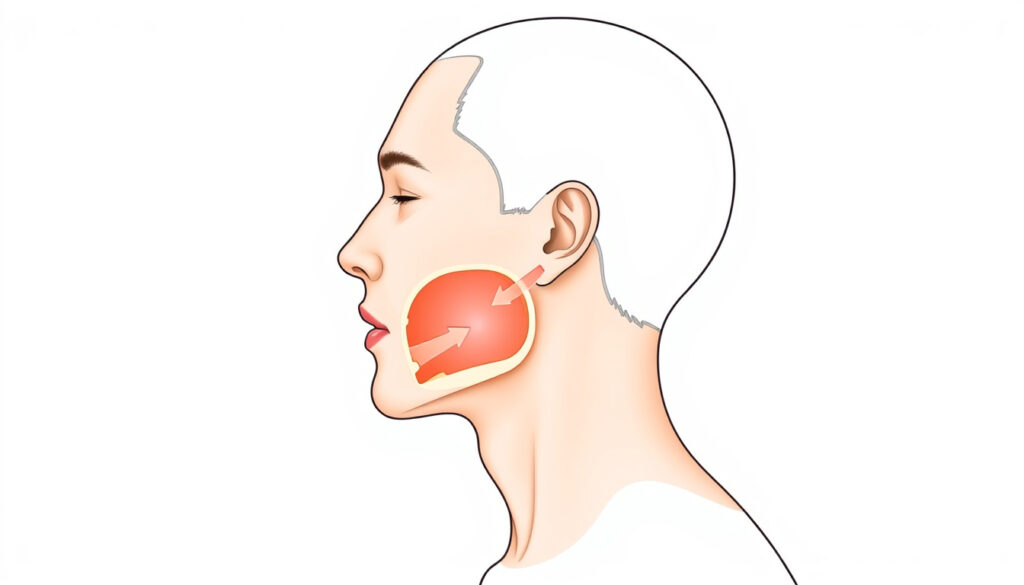
How to Mew Properly: Step-by-Step Guide for Beginners
Anyone who’s spent time scrolling through jawline transformation videos has come across mewing — a tongue posture technique that’s gained a massive online following. The idea sounds deceptively simple: place your tongue against the roof of your mouth, seal your lips, and over time your facial structure may change. This guide walks through the step-by-step technique, separates what’s known from what’s claimed, and lays out realistic expectations and common pitfalls, all grounded in the available guidance.
Key technique: Flatten tongue against the roof of the mouth ·
Teeth position: Bottom front teeth just behind upper front teeth, light contact ·
Age consideration: Effectiveness may decrease after age 18
Quick snapshot
- A tongue posture technique (WebMD (medical consumer resource))
- Claims to improve jawline (WebMD (medical consumer resource))
- Originated from orthodontist John Mew (WebMD (medical consumer resource))
- Flatten tongue against roof (Mewing.app (beginner guide))
- Seal lips gently (Mewing.app (beginner guide))
- Keep teeth in light contact (Mewing.app (beginner guide))
- Overexertion may cause jaw pain (Functional Face OMT (myofunctional therapy))
- No proven bone movement (Functional Face OMT (myofunctional therapy))
- Results vary individually (Functional Face OMT (myofunctional therapy))
- Initial awareness: days
- Subtle changes: months
- Notable reshaping: 6-18 months
Four core facts, one takeaway: mewing requires consistent, gentle practice over months, not a single dramatic change.
How do I know if I am mewing correctly?
Signs of correct tongue posture
The most reliable indicator of correct mewing is a broad, flat contact between your tongue and the roof of your mouth. Mewing.app (beginner guide) instructs beginners to place the entire tongue against the palate — not just the tip. When done properly, you should feel the tongue’s full surface, from front to back, resting against the hard palate.
Three specific signals that you’re on the right track:
- Your tongue feels evenly spread across the palate, with no air gaps on the sides.
- Your bottom front teeth sit just behind your upper front teeth, with light contact rather than a clenched bite — a position described by WebMD (medical consumer resource).
- Your lips are sealed without tension, and breathing happens through your nose, not your mouth.
The pattern: comfort, not force. If you feel strain in your jaw, tongue, or neck, you’re likely pressing too hard.
Common mistakes
Most beginners make the same error: pressing the tongue tip against the back of the front teeth. According to guidance from Mewing.app (beginner guide), the tip should sit slightly behind the upper front teeth, not on them. Pressing the tip against teeth can cause discomfort over time and does not engage the full palate.
Another frequent mistake is forcing the tongue hard against the palate. Functional Face OMT (myofunctional therapy) specifically cautions against this — the tongue’s rest posture should be gentle, not strained. A strained tongue muscle can lead to fatigue and jaw soreness, which are signs you’ve turned a rest posture into an active exercise.
Why this matters: people who treat mewing as a “hold it tight” exercise are more likely to quit within a week. The ones who stick with it treat the posture as a default resting position.
Beginners who force tongue pressure will experience jaw soreness and quit. Those who use gentle contact have a better chance of making it a lasting habit — but they also have to accept that subtle changes take months, not days.
Where should my tongue be when I mew?
Step-by-step tongue placement
The positioning is precise but simple. Here is the mechanical sequence described across clinical and community sources:
- Step 1: Close your mouth and relax your jaw. Bring your bottom front teeth just behind your upper front teeth, with light contact.
- Step 2: Flatten your entire tongue against the roof of your mouth, starting from the tip and spreading backward.
- Step 3: The tip of the tongue should rest just behind the upper front teeth — not touching them — as noted by Mewing.app (beginner guide).
- Step 4: Seal your lips gently. Do not force them shut; a relaxed seal is the goal.
- Step 5: Breathe through your nose. If you cannot breathe comfortably through your nose, you may need to address nasal breathing issues first.
The sequence from Face Forward (oral myofunctional therapy) emphasizes that the tongue should sit high in the mouth and contact the palate without touching the teeth — a clinically described ideal oral rest posture. Healthline (health information publisher) similarly advises that the tongue should rest on the roof of the mouth rather than the floor.
The catch: this is a rest posture, not a workout. Once you’ve placed your tongue, the goal is to maintain that position without constant conscious effort.
Common errors in tongue position
Three positioning errors appear repeatedly in community forums and guides:
- Tongue tip on teeth. The tip should be behind the front teeth, not pressing against them. Continuous contact with teeth can lead to misalignment over time.
- Only the tip on the palate. Some beginners place only the tongue tip against the roof, leaving the rest of the tongue on the floor of the mouth. This misses the entire point — the whole tongue should be engaged, as stated by Alta Loma Dental Care (orthodontic practice).
- Too much force. Pressing the tongue hard into the palate activates the wrong muscles and can cause jaw pain. WebMD (medical consumer resource) frames mewing as a technique that is supposed to change the jawline, but notes that the aesthetic claim is not established as fact — and excessive force contradicts the gentle rest posture that clinicians recommend.
The difference between correct and incorrect mewing often comes down to pressure. Too much force turns a rest posture into an active strain. Too little engagement means the tongue never settles on the palate at all.
How long does it take mewing to work?
Factors affecting results
There is no single timeline for visible changes because mewing is not a medically approved treatment with standard protocols. That said, community-reported patterns and the clinical framing of orthotropics give some parameters.
Six factors that influence how quickly someone might see facial changes:
| Factor | Effect on timeline | Source context |
|---|---|---|
| Age | Younger individuals (before 18) are likelier to see changes because their facial bones are still developing. | Kevin O’Brien Orthodontic Blog (orthodontic analysis) |
| Consistency | Maintaining tongue posture for most waking hours shows better results than occasional practice. | Mewing.app (beginner guide) |
| Nasal breathing | If you breathe through your mouth during sleep, tongue posture cannot be maintained. | Martin Higgins Physiotherapy (physiotherapy practice) |
| Existing jaw structure | Individuals with already well-developed jawlines see less dramatic changes. | Community reports |
| Genetics | Bone structure and facial growth patterns are largely hereditary. | Established medical understanding |
| Starting posture | Those with poor resting tongue posture see more noticeable changes. | Face Forward (oral myofunctional therapy) |
The implication: timeline is personal. The same technique produces different results for a 15-year-old vs. a 30-year-old, for someone who sleep-breaths through their nose vs. someone who doesn’t.
Realistic expectations
Most community members report noticing subtle changes — a more defined jawline angle, less facial puffiness — between 6 and 18 months of consistent practice. Healthline (health information publisher) frames tongue posture exercises as potentially affecting facial appearance but uses careful language: “may help” rather than “does cause.” This is not a rapid transformation technique.
If someone claims they reshaped their jaw in three days, they are describing muscle relaxation or posture shift, not bone movement. Bones in the craniofacial system take months to remodel even under orthodontic force, and mewing applies far less force than braces or aligners.
Can mewing go wrong?
Potential risks of improper mewing
While mewing is generally low-risk — it’s essentially a tongue rest position — improper technique can cause discomfort. Three specific risks stand out in the available guidance:
- Temporomandibular joint (TMJ) discomfort. Pressing the tongue hard into the palate may strain the jaw muscles. Functional Face OMT (myofunctional therapy) advises that the tongue should rest gently and not be forced — a caution repeated in multiple sources.
- Tooth movement or wear. If the tongue consistently presses against the front teeth, it can apply enough force to slowly shift them forward over years. This is the same principle that causes “tongue thrust” — a recognized oral habit that dental professionals treat.
- Jaw pain from clenching. Some beginners interpret “teeth in light contact” as “clench your jaw.” Persistent clenching can lead to headaches, facial pain, and worn teeth.
The trade-off: the potential upside (better facial posture) likely outweighs the risk (discomfort from overdoing it) — provided you stop if it hurts. Pain is the body’s signal that you’ve left the “rest posture” zone.
Signs of incorrect technique
If any of these apply, you may be mewing improperly:
- Jaw soreness after holding the posture for more than a few minutes.
- A clicking or popping sound in your jaw joints.
- Headaches that start after holding the position.
- Teeth that feel loose or sensitive.
- Difficulty swallowing or feeling like your tongue is in the way.
WebMD (medical consumer resource) notes that no robust scientific evidence confirms that mewing reshapes the jaw — and that the technique is not medically recommended for treating jaw issues. If you experience persistent pain, the safest approach is to stop and consult a dentist or orthodontist.
Pain is not a sign that mewing is “working.” If your jaw hurts, you’re no longer in rest posture — you’re in tension posture. Stop and reset with a gentler tongue placement.
Does Mewing Actually Reshape Your Jaw?
Scientific evidence on mewing
The central question — can tongue posture reshape jaw bone — lacks a robust evidence base. No formal clinical trials have been conducted on mewing’s effect on human facial bones. Kevin O’Brien Orthodontic Blog (orthodontic analysis) reviews the larger orthotropics literature and finds that orthotropics — the broader theory behind mewing — is not supported by high-quality studies.
The term “orthotropics” itself was coined by John Mew, a British orthodontist, and his approach remains controversial. Mainstream orthodontics generally does not endorse mewing as a technique for changing facial bone structure. WebMD (medical consumer resource) frames mewing as something people do “in hopes of changing their jawline or face shape,” language that stops short of endorsing the claim as proven.
The implication: the best available evidence says “no” on bone reshaping, but “maybe” on soft tissue and posture improvement.
Before and after anecdotes
Online communities are full of transformation photos that claim dramatic results. However, several confounding factors make these hard to interpret:
- Angle and lighting differences between before/after photos can simulate facial changes that did not actually occur.
- Weight changes dramatically affect jawline definition. Losing even a few pounds can sharpen the jaw.
- Natural facial development continues into the early 20s. Teenagers who “mewed” may have simply experienced their natural maturing facial structure.
- Improved posture — including neck and shoulder position — can make the jaw appear more defined without any bone change.
The catch: the most dramatic before-and-after photos come from individuals who were also losing weight, getting older, or improving their general posture — making it impossible to attribute the change to tongue position alone.
Timeline signal
The timeline for mewing research is notable for what it lacks: a formal clinical study. While the practice has been discussed online for over a decade, no controlled trial has been published in a peer-reviewed dental or orthodontic journal.
- Ongoing: No formal clinical trials conducted on mewing’s effect on facial bones. (Kevin O’Brien Orthodontic Blog (orthodontic analysis))
Why this matters: the absence of evidence is not evidence of absence — but for a technique that has been practiced for years, the lack of clinical data should inform how seriously you take the most dramatic claims.
Confirmed facts vs. what’s unclear
Confirmed facts
- Tongue can be positioned on the roof of the mouth — this is anatomically possible and described by multiple sources (Healthline (health information publisher), Mewing.app (beginner guide), Functional Face OMT (myofunctional therapy)).
- Lips can be sealed without strain — this is part of normal oral rest posture described in myofunctional therapy.
What’s unclear
- Whether mewing actually reshapes bone — no high-quality clinical evidence supports this claim (WebMD (medical consumer resource), Kevin O’Brien Orthodontic Blog (orthodontic analysis)).
- Long-term safety data for sustained tongue-to-palate posture — no studies track long-term outcomes.
The pattern: what’s confirmed is anatomy. What’s unclear is efficacy. This divide is the core tension in every conversation about mewing.
Expert guidance on mewing technique
Clinical sources do not discuss “mewing” by name, but they do describe ideal oral rest posture. The following guidance comes from myofunctional therapy and orthodontic sources:
“Close your mouth and relax. Move your jaw so that your bottom front teeth are just behind your upper front teeth. Flatten your tongue against the roof of your mouth. Keep your lips together without straining.”
– WebMD (medical consumer resource)
This aligns with what Face Forward (oral myofunctional therapy) describes as ideal resting posture: the tongue sits high in the mouth and contacts the palate, the teeth are slightly apart or lightly touching, and the lips are sealed comfortably.
“The tongue should rest gently in the palate and should not touch the teeth. Force should not be applied.”
– Functional Face OMT (myofunctional therapy)
The common thread across these clinical perspectives: mewing is not a forceful exercise. It is a rest position. The most effective way to practice may be to stop thinking about it as an active technique and start treating it as your tongue’s natural position throughout the day.
Summary
Mewing occupies an unusual space: a technique with massive online popularity but minimal clinical validation. The biomechanical instructions — tongue to palate, lips sealed, teeth lightly touching — are consistent with what myofunctional therapists describe as ideal oral rest posture. But the grand claim — that this posture can reshape your jawline in months — lacks robust scientific support. For the reader considering mewing, the implication is clear: practice gentle tongue posture as a daily habit, maintain realistic expectations about what bones can and cannot do without orthodontic force, and be skeptical of dramatic before-and-after photos that credit tongue position alone.
primasmiledental.com, advancedsleepandtmjsolutions.com, kieferfreund.com, youtube.com, vinmec.com
Frequently asked questions
Should my teeth touch while mewing?
Light contact is fine. Your bottom front teeth should be just behind your upper front teeth with gentle contact. Do not clench your jaw — the goal is relaxed contact, not grinding or pressure. WebMD (medical consumer resource) describes this as the correct starting position.
How to professionally mew?
Professional mewing is not a clinical term. In the orthotropics community, it refers to the consistent practice of tongue posture combined with nasal breathing and proper head posture. No certification or licensed professional teaches mewing — it is a self-taught technique based on shared community knowledge and myofunctional therapy principles.
Is 18 too late for mewing?
It is not too late, but results may be less dramatic. Facial bones continue to develop into the early 20s, but the most significant growth happens during puberty. After 18, tongue posture may improve muscle tone and facial appearance, but structural bone changes are less likely. Kevin O’Brien Orthodontic Blog (orthodontic analysis) notes that orthotropics lacks evidence of bone remodeling in adults.
Is jawline 100% genetic?
Largely, yes. The shape and definition of your jawbone are determined by genetics and your natural growth patterns. Factors like body fat percentage and muscle mass also affect how defined your jawline appears, but the underlying bone structure is hereditary. No amount of tongue posture can change the genetic blueprint of your facial skeleton.
How to get a sharp jawline in 3 days?
It is not possible to change your jaw bone in three days. Any perceived change in this timeframe is due to water retention reduction, stomach emptiness, or improved posture. For a longer-term approach, reducing body fat through diet and exercise is the most reliable way to make your jawline more visible. Mewing does not produce visible results in days.
Can mewing fix an overbite?
Orthotropics proponents claim that proper tongue posture can help correct an overbite by encouraging forward facial growth. However, this claim lacks clinical support. Kevin O’Brien Orthodontic Blog (orthodontic analysis) argues that orthotropics does not have the evidence to replace conventional orthodontic treatment. For significant overbites, consult an orthodontist rather than relying on mewing alone.
Do I need to mew all day?
Consistency matters, but all-day mewing is not practical or necessary. The goal is to make tongue-to-palate contact your default resting posture during waking hours. If you maintain it most of the time without thinking about it, you’re doing it right. Forced all-day holding can cause fatigue and is counterproductive.
More related posts
 The Walking Dead Cast – Actors, Characters and 2024 Status
 Where to Watch Brooklyn 99: Netflix, Peacock & All Options
 Ozempic Face Before and After: What Changes to Expect
 Yoga Studio Near Me: Cost, Frequency & Beginner Guide
 Sydney Sweeney American Eagle Ad: Backla h, Impact, and Re pon e
 Mexican Street Corn Salad Recipe (Easy & Authentic)
 John Bell (Scottish Actor): Biography, Age & Career
 Ravyn Lenae Love Me Not: Lyrics, Release & Chart Rise
