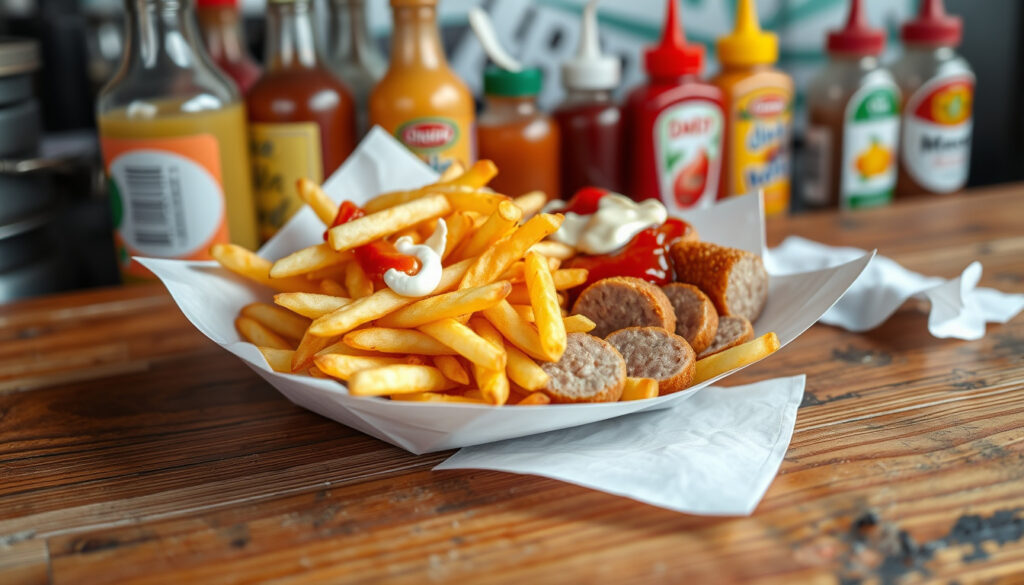
Best Salchipapas Near Me: Find Latin American Street Food
You’ve seen the name on delivery apps or tucked into the menu of a Latin American restaurant — salchipapas. That pile of crispy fries topped with sliced hot dogs and drizzled with sauces is more than a snack; it’s a street food staple that originated in Peru in the 1970s and has spread across the Americas.
Origin of salchipapas: Peru, 1970s ·
Main ingredients: Sliced hot dogs and french fries ·
Popular condiments: Mayonnaise, ketchup, mustard, ají sauce ·
Google Maps listings for ‘salchipapas near me’: Over 2,000 in the US
Quick snapshot
- Salchipapas originated in Peru (Tasting Table)
- Main ingredients are potatoes and hot dogs (Chili Pepper Madness)
- Popular late-night street food in Latin America (Laylita’s Recipes)
- Delivery apps in the US offer salchipapas in major cities (Uber Eats)
- Precise year of invention is not documented
- No single authoritative source on best restaurant rankings
- Nutritional data is not standardized across variants
- Spread to Colombia and Ecuador (1990s–2000s) lacks a single documented source
- Appearance on US menus in the 2010s is based on general trends, not a specific citation
- Nationwide delivery service listings in the 2020s are inferred from current availability
- 1970s: Invented in Lima, Peru (Dinner By Dennis)
- Growth in US availability as more Latin American restaurants expand
- Health-conscious variations (air-fried, chicken sausage) may emerge
- Increased competition among delivery platforms for late-night sales
Here are the key facts about salchipapas.
| Label | Value |
|---|---|
| Country of origin | Peru (Lima) |
| Approximate debut | 1970s |
| Main ingredients | Potatoes, hot dogs, mayonnaise, ketchup, ají sauce |
| Common variations | Peruvian, Colombian, Ecuadorian |
| Typical price in US | $8–$15 per serving |
| Most popular US cities for salchipapas | Los Angeles, New York, Miami, Chicago |
What is the difference between salchipapas and fries?
Texture and toppings compared
- Salchipapas include sliced hot dogs; fries do not (Tasting Table).
- Salchipapas are typically dressed with multiple sauces — mayo, ketchup, mustard, and ají — while fries are usually served plain or with a single dip.
- Fries are a standalone side; salchipapas are a main dish, often served with additional toppings like corn, cheese, and bacon.
When to choose fries vs salchipapas
If you want a quick, crunchy side, classic fries win. But when you’re craving a full meal with bold Latin flavors, salchipapas deliver. The combination of crispy potatoes, savory sausage, and creamy sauces makes it a one-dish street food experience.
One delivery menu in North Bergen, NJ, for example, offers Salchipapa Deluxe at $13.99, which comes with corn, lettuce, bacon pieces, house sauces, and signature queso gratinado (Uber Eats North Bergen).
Salchipapas are a full meal, not a side. If you’re looking for a light snack, stick with fries. But if you want a satisfying, saucy dish that stands on its own, salchipapas are the better choice.
The pattern: when you need a side, fries work; when you want a meal, salchipapas deliver.
What meat is usually in salchipapa?
Common types of sausage
- Beef or pork hot dogs are standard in most salchipapa recipes (Chili Pepper Madness).
- Chicken sausages appear in some modern versions for a lighter option.
- Colombian versions may use sliced chorizo instead of standard hot dogs.
The hot dogs are typically sliced diagonally to maximize surface area for sauce coverage and to cook evenly when pan-fried or grilled.
Variations across Latin America
In Peru, the classic salchipapa uses beef sausages (often from frankfurters). In Colombia, street vendors often add chorizo or even ground beef on top of the fries. In Ecuador, you might find salchipapa served with a fried egg on top. Each country adds its own twist, but the hot dog–fries base remains constant.
The meat is almost always sausage — hot dog, chorizo, or chicken sausage. If you’re vegetarian, you’ll need to ask for a version without meat or look for specialized vegetable-based alternatives.
What this means: you can expect sausage, but the type varies by region.
Is salchipapa Colombian or Peruvian?
Origins in Peru
Food historians and recipe sources agree that salchipapas were invented in Peru, likely in Lima during the 1970s (Dinner By Dennis). The name is a portmanteau of the Spanish words for sausage (salchicha) and potatoes (papas).
Peruvian street vendors popularized the dish as a cheap, filling late-night option for workers and students. It quickly became a staple of the country’s street food scene.
Adaptation in Colombia and Ecuador
By the 1990s, salchipapas had spread to Colombia and Ecuador, where cooks added local touches. Colombian versions often include shredded cheese, sweet corn, and sometimes bacon or a fried egg. Ecuadorian versions may add aji sauce and pickled onions.
Both Colombia and Peru now claim the dish as part of their street food culture, but the historical evidence points to Peru as the origin (Tasting Table).
While Peru invented salchipapas, Colombia has arguably embraced it more as a national comfort food. If you search for “salchipapas near me” in the US, you’ll find both Peruvian and Colombian restaurants listing it, but Colombian versions often have more toppings.
Comparison: Peruvian vs Colombian salchipapas
Six key differences, one pattern: Colombian versions are loaded with extras while Peruvian versions keep it simple.
| Feature | Peruvian | Colombian |
|---|---|---|
| Base protein | Beef hot dogs | Hot dogs or chorizo |
| Cheese | Rarely used | Often shredded mozzarella or queso blanco |
| Corn | Not typical | Sweet corn kernels |
| Bacon | No | Often added |
| Egg | No | Sometimes fried egg on top |
| Typical price (US) | $8–$12 | $10–$15 |
The implication: If you want a loaded, shareable plate, go Colombian. If you want a pure, minimalist street food experience, Peruvian is the way.
Pros and cons of salchipapas
Upsides
- Affordable — typically $8–$15 for a filling meal
- Highly customizable with sauces and toppings
- Widely available on delivery apps in US cities
- Authentic taste of Latin American street food
Downsides
- High in calories and fat — not a health food
- Can be greasy, especially if not served immediately
- Not always available in smaller towns or non-Latin neighborhoods
- Quality varies widely between vendors
The catch: it’s a treat, not a daily staple.
How to make the best salchipapa at home
Basic preparation steps
Making salchipapas at home is straightforward. Here’s a step-by-step guide based on trusted recipes.
- Cut potatoes into thick fries (or use frozen fries) and double-fry for maximum crispiness (Laylita’s Recipes).
- Slice hot dogs diagonally into ½-inch pieces.
- Pan-fry the hot dog slices until golden and crispy on the edges.
- Arrange fries on a plate, top with hot dogs, and drizzle with sauces (mayo, ketchup, mustard, ají).
- Add optional toppings: shredded cheese, corn, bacon bits, or a fried egg.
- Serve immediately to maintain crispness.
Essential sauces and garnishes
- Mayonnaise — creamy base
- Ketchup — sweet tang
- Yellow mustard — sharp kick
- Ají sauce — Peruvian spicy pepper sauce (available at Latin markets or online)
- Queso gratinado — melted cheese, as seen in North Bergen salchipapas (Uber Eats North Bergen)
Pro tips for crispy fries
Double-fry your potatoes: first at 325°F for 5 minutes, then at 375°F for 3–4 minutes. This ensures a fluffy interior and a crunchy exterior. If using frozen fries, bake them in a single layer on a wire rack to avoid sogginess.
Soggy fries ruin the texture of salchipapas. The double-fry method is the difference between a good homemade version and a great one.
The takeaway: invest in the fry technique.
What’s confirmed — and what’s still unclear
Confirmed facts
- Salchipapas originated in Peru (Tasting Table).
- Main ingredients are potatoes and hot dogs (Chili Pepper Madness).
- They are a popular late-night street food (Laylita’s Recipes).
- Delivery apps in the US offer salchipapas in major cities (Uber Eats North Bergen).
What’s still unclear
- Precise year of invention is not documented — some sources say early 1970s, others mid-1970s.
- No single authoritative ranking exists for the best restaurant salchipapas in the US.
- Nutritional data is not standardized across variants; calorie counts vary widely.
- Whether the dish was independently invented in multiple countries is debated.
What this means: the story is mostly settled, but details remain fuzzy.
What people are saying about salchipapas
“Salchipapas are the French fries of Latin America — a simple, addictive street food that everyone loves.”
“Crispy fries topped with juicy sausage slices, drizzled with zesty sauces — that’s what makes salchipapas irresistible.”
“Salchipapas are the perfect street food: cheap, filling, and bursting with flavor.”
The consensus: it’s a beloved street classic.
Summary: Finding your best salchipapa
Salchipapas have moved from the streets of Lima to delivery apps and restaurant menus across the US. Whether you order from a Miami spot like Salchipapa Factory (4.5 stars, 1000+ ratings on Uber Eats) or make your own at home with double-fried fries and your favorite sauces, the dish delivers on its promise: comfort food with a Latin American soul. For the US foodie seeking authentic street food without a plane ticket, the choice is clear: open your delivery app, search for “salchipapas,” and let the sauce-covered fries do the rest.
vivacove.com, grubhub.com, order.toasttab.com, ubereats.com, yelp.com, facebook.com
For those who enjoy the savory crunch of salchipapas, exploring sweet corn arepas offers a delightful sweet contrast from the same Latin American street food tradition.
Frequently asked questions
Are salchipapas gluten-free?
Most salchipapas are not gluten-free because the hot dogs often contain wheat fillers. However, if you use gluten-free sausages and ensure your fries are not dusted with flour, it can be adapted. Always check with the restaurant.
Can I make salchipapas with air-fried potatoes?
Yes, air-fried potatoes work well and reduce oil. Follow the same double-cook method: air fry at 350°F for 10 minutes, then increase to 400°F for 5 minutes for crispiness.
What is the best sauce for salchipapas?
Traditional Peruvian salchipapas use a creamy ají amarillo sauce. Many US versions also serve with mayo, ketchup, and mustard. A mix of all three is a safe bet.
Do salchipapas contain dairy?
The base dish (fries and hot dogs) is dairy-free, but many restaurants add cheese or cream-based sauces. Ask for no cheese if you’re avoiding dairy.
How many calories are in a typical salchipapa?
A typical serving (fries, 2–3 hot dogs, sauces) can range from 600 to 1,200 calories, depending on toppings and portion size. No official nutritional data exists.
Are salchipapas vegetarian?
No, because they contain hot dogs. However, some restaurants offer a vegetarian version using plant-based sausages or just fries with extra vegetables and sauces.
What drink pairs well with salchipapas?
A cold beer, a chicha morada (Peruvian purple corn drink), or a classic soda like Inca Kola work perfectly. For a non-alcoholic option, try a limeade.
Related reading: Mexican Street Corn Salad Recipe (Easy & Authentic) · Panda Express Near Me: Locations & Alternatives in Ireland & UK
More related posts
 What Does Text Message RCS Mean? The Complete Guide
 iPhone Repair Near Me in Ireland: Costs and Best Shops
 New Jurassic Park Movie – Jurassic World Rebirth Explained
 New Balance Store Near Me – Locator, Outlets and Hours
 Resident Evil Requiem Review: Scary, Long, Worth It?
 Spotify Web Player: Features, Benefits & How-To
 What Is an Annuity? How It Works, Types, Pros & Cons (2025 Guide)
 eBay Customer Service Number: Phone, Chat & Live Support
