What Does a Spider Bite Look Like? Symptoms & Care
That mysterious red bump on your arm — is it a spider bite or something else? Most people will never know for sure, because up to 80% of suspected spider bites are actually caused by other conditions like MRSA or tick bites, according to Mayo Clinic experts.
Most spider bites cause only mild symptoms: redness, swelling, itching ·
Common non-spider causes of similar lesions: MRSA, tick bites, shingles ·
Number of dangerous spider species in the US: 2 (black widow, brown recluse) ·
Approximate time for a mild bite to heal: 3-7 days ·
Treatment at home for non-venomous bites: clean, ice, elevate, antihistamine
Here’s how to figure out what’s actually going on with that bite and when it’s worth a trip to the doctor.
Quick snapshot
- Most spider bites are harmless and heal on their own within a week (Mayo Clinic).
- Brown recluse bites can cause tissue necrosis in some cases (Healthline).
- Black widow bites require medical attention due to neurotoxin (CDC).
- Most venomous spider bites cause localized pain and swelling (WebMD).
- Exactly which spider caused a bite is often never confirmed (Mayo Clinic).
- The true incidence of spider bites is unknown because so many are misdiagnosed (WebMD).
- Whether a brown recluse bite will progress to necrosis is unpredictable (Healthline). (Mayo Clinic)
- The exact number of spider bites that go unnoticed is unknown (CDC). (Mayo Clinic)
- Mild bites heal in 3–7 days; recluse bites can take 3 months to fully heal (Healthline).
- Ulceration from a recluse bite typically appears 1–2 weeks after the bite (Healthline).
- Clean the bite, apply ice, and monitor for spreading redness or systemic symptoms (Harvard Health).
- Seek medical care if you experience severe pain, difficulty breathing, or fever (Mayo Clinic). (Harvard Health)
Five key facts about spider bite identification at a glance.
| Fact | Details |
|---|---|
| Most common reaction | Red, itchy bump that resolves in 3-7 days |
| US venomous species | Black widow and brown recluse |
| Misdiagnosis rate | Approximately 80% of suspected spider bites are from other causes |
| Treatment for mild bites | Clean, ice, elevation, OTC pain relievers |
| Emergency symptoms | Difficulty breathing, severe cramping, spreading infection |
How do you tell if a bite is from a spider?
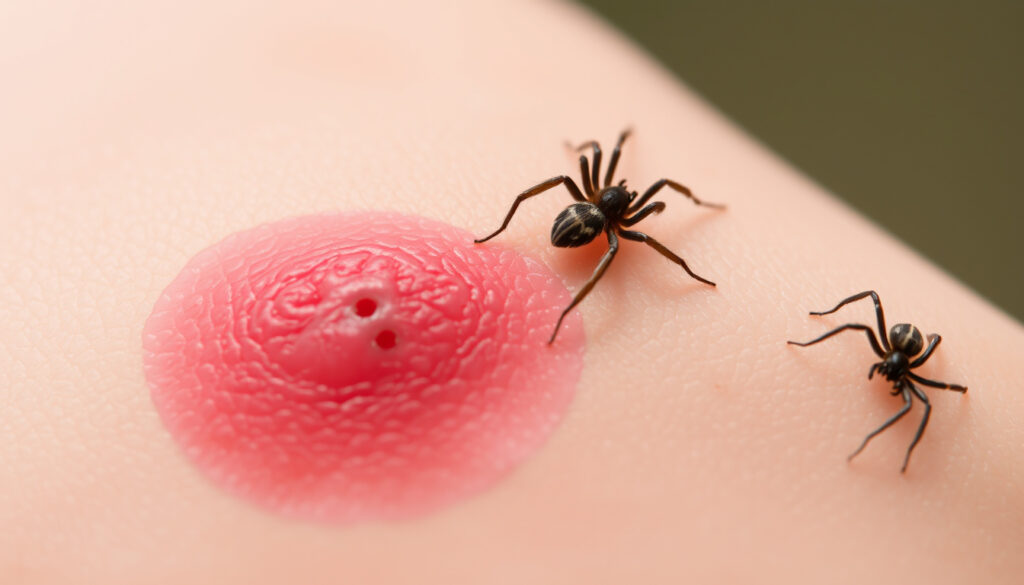
Recognizing a spider bite starts with knowing what to look for. Most spider bites cause redness, swelling, pain, or itching, according to Mayo Clinic dermatologists. Some bites leave tiny puncture marks — black widow bites commonly have two puncture marks, per the CDC.
Common symptoms of spider bites
- Redness and swelling around the bite area (Mayo Clinic)
- Itching or mild to moderate pain (Mayo Clinic)
- In venomous bites: intense pain within minutes, blistering, or muscle cramps (CDC)
Puncture marks and skin reactions
A spider bite may appear as a small red bump with a central puncture point. Black widow bites often show two distinct puncture marks, while brown recluse bites may start with a pale center surrounded by a red ring (Mayo Clinic).
Most people worry about spider bites, but the real threat is missing a bacterial infection that needs antibiotics. Look for pus, spreading redness, or fever — not just a bump.
The pattern: Most spider bites look like generic insect bites — it’s the progression and severity that tell the real story.
Key takeaway: Most spider bites are harmless. The real risk is misdiagnosing a bacterial infection. Check for pus, fever, or spreading redness.
What does a brown recluse spider bite look like?
Brown recluse bites are often painless at first but can develop into serious wounds. Here’s what to watch for.
Early stages of a brown recluse bite
- Initially a red, swollen area with a central blister (Healthline)
- Pale center with a red ring (bull’s-eye appearance) (Mayo Clinic)
- Pain increases over the first 8 hours (Mayo Clinic)
Progression: blister to ulcer
Within 1 to 2 weeks, the wound may turn into a deep, open ulcer with a dark scab (Healthline). Systemic symptoms like fever, chills, and body aches can also occur (CDC).
Why this matters: A brown recluse bite is often mistaken for a skin infection, which can delay proper wound care.
What is commonly mistaken for a spider bite?
Up to 80% of suspected spider bites are actually caused by other conditions, according to Harvard Health. Here are the most common lookalikes.
MRSA and other bacterial infections
- MRSA often appears as a painful red bump with pus, similar to a spider bite (WebMD)
- Cellulitis can cause spreading redness and warmth (Mayo Clinic)
Tick bites, shingles, and allergic reactions
Tick bites can resemble spider bites with a red center and ring. Shingles causes a blistering rash that is often mistaken for a spider bite (CDC). Allergic reactions to insect bites or plants can also produce similar lesions.
If you live in the southern or midwestern US, a blister that turns into an ulcer after a week may be a recluse bite. Don’t ignore it — see a dermatologist for proper wound care.
The takeaway: If you didn’t see the spider, it’s more likely something else.
When to worry about a spider bite?
Most spider bites are harmless, but certain symptoms signal trouble. According to Mayo Clinic, seek care if you notice spreading redness, fever, or difficulty breathing.
Signs that require medical attention
- Worsening pain or redness around the bite (Mayo Clinic)
- Fever, chills, or body aches (CDC)
- Muscle cramps or chest tightness (black widow) (CDC)
- Ulceration or dark skin around the bite (brown recluse) (Healthline)
Systemic symptoms to watch for
Black widow venom can cause severe muscle pain, abdominal cramps, and high blood pressure. Brown recluse venom may lead to kidney damage in rare cases. Any sign of infection or severe illness warrants immediate medical evaluation (CDC).
What this means: If you have a known dangerous spider in your area and symptoms are getting worse, don’t wait.
How to treat spider bites and when you need to see your doctor?
For most mild bites, home care is enough. But knowing when to escalate makes the difference.
First aid for mild spider bites at home
- Clean the bite with soap and water (Harvard Health)
- Apply a cold pack or ice wrapped in cloth to reduce swelling (Mayo Clinic)
- Elevate the affected limb if possible (Harvard Health)
- Take an over-the-counter antihistamine or pain reliever (GoodRx)
- Monitor for signs of infection or worsening (Mayo Clinic)
Professional medical treatments
For venomous bites, doctors may administer antivenom (black widow), wound debridement (brown recluse), or antibiotics for secondary infection (Medscape). Seek immediate care if you suspect a black widow or brown recluse bite, or if symptoms are severe.
The trade-off: home care works for 9 out of 10 bites, but the 10th needs a doctor fast.
Confirmed facts
- Most spider bites are harmless and heal on their own.
- Brown recluse bites can cause tissue necrosis.
- Black widow bites require medical attention.
What’s unclear
- Exactly which spider caused a bite is often never confirmed.
- The true incidence of spider bites is unknown due to misdiagnosis.
- The true rate of black widow bite complications is unknown due to underreporting.
“Many patients are convinced they have a spider bite when they actually have a staph infection or an allergic reaction. Unless you saw the spider, it’s best to consider other possibilities first.”
— Mayo Clinic dermatology expert
“First aid for a spider bite is straightforward: clean it, cool it, and keep it elevated. Over-the-counter pain relievers can help with discomfort.”
“The classic brown recluse bite starts as a small blister that turns into a deep sore over a week or two. It’s flat, not swollen, and rarely has pus.”
For anyone with a suspicious bite, the lesson is clear: if you didn’t see the spider, treat the wound as a possible infection and monitor closely. If symptoms worsen, seek medical help without delay. For patients in regions with black widow or brown recluse spiders, the smartest move is to take a photo, note the time, and call your doctor if things change.
aaipest.com, goodrx.com, health.harvard.edu, idph.state.il.us, health.hawaii.gov, mayoclinic.org, drs.illinois.edu, my.clevelandclinic.org
For a comprehensive look at how spider bite symptoms unfold over time, the spider bite symptoms timeline offers a detailed timeline and advice on when to seek medical care.
Frequently asked questions
What does a spider bite look like?
A spider bite typically appears as a red, mildly swollen bump that may be itchy or painful. Some bites show tiny puncture marks. Venomous bites can develop blistering, ulceration, or muscle cramps within hours (Mayo Clinic).
What are the first signs of a spider bite?
Initial signs include redness, swelling, and a small bump. Black widow bites may cause immediate sharp pain, while brown recluse bites are often painless at first (CDC).
Can a spider bite look like a pimple?
Yes, especially in early stages. A spider bite may appear as a red, raised bump similar to a pimple. Unlike pimples, spider bites often have a central puncture mark and may blister (WebMD).
How long does a spider bite last?
Most mild spider bites heal within 3–7 days. Brown recluse bites can take several weeks to months and may leave a scar (Healthline).
Do spider bites have two holes?
Some spider bites, particularly from black widows, can show two tiny puncture marks. Brown recluse bites usually have one central puncture (CDC).
What should I put on a spider bite?
Clean the bite with soap and water, apply a cold pack, and take an over-the-counter antihistamine or pain reliever. Avoid scratching and monitor for infection (GoodRx).
Is it a spider bite or bed bug bite?
Bed bug bites usually appear in clusters or lines, often on exposed skin at night. Spider bites are typically single and may have a central puncture. If you see multiple bites in a row, bed bugs are more likely (WebMD).
More related posts
 Real Good Chicken Strips – Nutrition, Cooking & Buying Guide
 Spartacus Season 1 Cast: Full List & Answers to Your Questions
 DDG (Rapper) – Complete Bio Career Family Facts
 Isabella Ladera y Beele Video Viral: Lawsuit Filed 2025
 Who Drafted Shedeur Sanders? Browns Pick QB in 5th Round
 University of Rhode Island: Prestige, Rank & Acceptance Rate
 Sydney Sweeney American Eagle Ad: Backla h, Impact, and Re pon e
 Do Carpenter Bees Sting? Pain, Myths & Removal Guide
