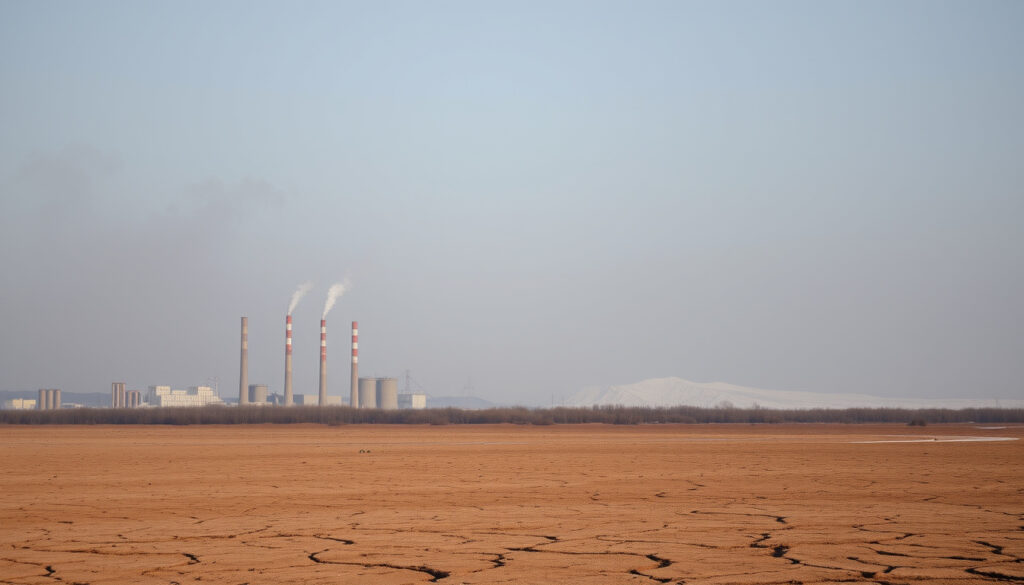
What Causes Climate Change? Main Causes Explained
Summers feel hotter and storms seem stronger — and scientists are clear that human activities are the dominant driver. Global temperatures have risen at about 0.27°C per decade since 2015.
Global average temperature rise since 1880: +1.1°C (NASA) ·
Current atmospheric CO₂ concentration: 420 ppm (NOAA, 2023) ·
Fossil fuel share of global GHG emissions: ~68% (United Nations) ·
Countries signed the Paris Agreement: 196
Quick snapshot
- Burning fossil fuels (coal, oil, gas) — United Nations
- Deforestation and land clearing — United Nations
- Agriculture and livestock — IPCC
- Industrial processes and waste — United Nations
- Volcanic eruptions (ash and sulfur aerosols) — MIT Climate
- Solar variability (sunspot cycles) — NASA
- Orbital Milankovitch cycles (MIT Climate)
- Ocean currents and ENSO — United Nations
- 2030: Last chance to keep 1.5°C alive — IPCC
- 2050: Net-zero target for many economies (IPCC)
- Tipping points could accelerate warming — Climate Change Tracker
- Sea-level rise threatening coastal cities — United Nations
- More intense heatwaves, floods, droughts — IPCC
- Biodiversity loss and ecosystem collapse — IPCC Special Report on 1.5°C
- Food and water security risks — United Nations
Five key facts capture the current state of climate science — a pattern of rising CO₂, warming temperatures, and narrowing carbon budgets.
| Metric | Value |
|---|---|
| Current CO₂ level | 420 ppm (highest in 3 million years) |
| Global temp increase | +1.1°C since 1880 |
| Main human cause | Fossil fuel combustion (~68% of GHG emissions) |
| Main natural factor | Volcanic eruptions and solar cycles (negligible in recent warming) |
| IPCC 1.5°C carbon budget remaining | Approximately 4–5 years of current emissions |
What are the 5 main causes of climate change?
Burning fossil fuels for energy and transport
Coal, oil, and natural gas combustion for electricity, heating, and transportation is the single largest source of greenhouse gas emissions. The United Nations (UN Climate) reports that fossil fuels account for roughly 68% of global emissions. When burned, they release CO₂ and other heat-trapping gases that build up in the atmosphere.
Deforestation and land-use change
Forests act as carbon sinks, absorbing more CO₂ than they release. Clearing them for agriculture, timber, or urban expansion reverses that role. According to UN estimates, deforestation contributes about 10% of annual human-caused emissions.
Agriculture (livestock, fertilizers, rice paddies)
Farming releases methane from livestock digestion and manure, and nitrous oxide from synthetic fertilizers. The IPCC (the UN’s climate science body) notes that agriculture, forestry, and other land use produce nearly a quarter of global greenhouse gases.
Industrial processes and cement production
Manufacturing cement, steel, and chemicals releases CO₂ both from energy use and from chemical reactions. The same IPCC assessment highlights industrial emissions as a major source, alongside fluorinated gases used in refrigeration.
Waste management and methane from landfills
Organic waste decomposing in landfills produces methane, a gas 25 times more potent than CO₂ over a century. UN data puts waste-sector emissions at about 5% of the global total.
Human-induced warming has increased at about 0.27°C per decade over 2015–2024, and essentially all of the observed warming is caused by human activities, according to Climate Change Tracker (independent climate data project). The pattern is unmistakable: fossil fuels dominate, while natural factors play a minor role.
The implication: Five causes, but one outweighs them all. Without a rapid shift away from fossil fuels, the other drivers will only compound the problem.
What are the big 5 natural causes of climate change?
Volcanic eruptions
Large eruptions inject sulfur dioxide into the stratosphere, forming aerosols that reflect sunlight and can temporarily cool the planet by a few tenths of a degree. MIT Climate explains that while volcanic cooling is real, it lasts only 1–3 years and has no effect on the long-term warming trend.
Solar variability
The sun’s energy output fluctuates over 11-year sunspot cycles. Measurements show these variations are too small — about 0.1% — to explain the rapid warming of the last 50 years. NASA confirms that solar changes cannot account for the observed temperature rise.
Orbital Milankovitch cycles
Changes in Earth’s orbit and tilt affect how much solar radiation reaches different latitudes. These cycles operate over tens of thousands of years, initiating ice ages and interglacials — but they are far too slow to cause the current warming.
Ocean currents (El Niño, La Niña, thermohaline circulation)
Ocean currents redistribute heat around the globe. The El Niño–Southern Oscillation (ENSO) can raise or lower global average temperature by about 0.2°C in a given year. The United Nations notes that the first months above 1.5°C occurred during a strong El Niño, but the underlying warming is driven by human emissions.
Methane releases from natural sources (wetlands, permafrost)
Wetlands and melting permafrost naturally emit methane. However, IPCC modelling shows that human sources now outpace natural ones by a wide margin, especially from agriculture and fossil fuel extraction.
Natural factors are real, but they explain less than 0.1°C of the 1.1°C rise since 1880. Human activities account for the rest, as Climate Change Tracker reports: for 2015–2024, 1.22°C out of 1.24°C observed warming was human-induced.
Why is 2030 the point of no return?
IPCC’s 1.5°C carbon budget
The IPCC (the UN’s climate science body) calculates that to limit warming to 1.5°C, global CO₂ emissions must peak before 2025 and fall 43% by 2030 relative to 2019. The remaining carbon budget is about 4–5 years of current emissions.
Current emission trends
Global CO₂ emissions hit a record 37 billion tonnes in 2023, according to the Global Carbon Project (international research consortium). At this rate, the budget will be exhausted by 2029–2030.
Tipping points
Exceeding the budget risks triggering irreversible changes: ice sheet collapse, permafrost thaw, and Amazon dieback. The Climate Change Tracker warns that reaching 1.5°C on a long-term basis is now inevitable in about five years if emissions are not cut to net zero immediately.
Policy pledges vs. actual action
Current Nationally Determined Contributions (NDCs) still lead to about 2.5°C warming. The IPCC states that to keep 2°C within reach, emissions must fall by a quarter by 2030. Even that target is off track.
Why this matters: The decisions made between now and 2030 will determine whether we cross critical tipping points — and once crossed, they cannot be reversed.
What will Earth look like in 2050?
Projected temperature increase
Even under strong mitigation (RCP2.6), global temperature could be 1.5–2°C above pre-industrial levels by 2050. Under the high-emissions scenario (RCP8.5), NASA estimates a rise of 2.5–4.5°C by 2100.
Sea-level rise and coastal flooding
The United Nations projects sea levels could rise 0.2–0.5 metres by 2050, threatening major coastal cities like Mumbai, Shanghai, and New York with more frequent flooding.
Extreme weather frequency
Heatwaves, droughts, and heavy precipitation will become more frequent and severe. The IPCC warns that a 1.5°C world would see a 10–20% increase in extreme rainfall intensity in many regions.
Ecosystem shifts and biodiversity loss
Coral reefs could decline by 70–90% at 1.5°C warming, according to the IPCC’s Special Report on 1.5°C. At 2°C, the loss exceeds 99%.
Human migration and food security
Crop yields in tropical regions could drop by 10–25%, raising food prices and driving migration. The United Nations expects 250,000 additional deaths per year from undernutrition, malaria, and heat stress between 2030 and 2050.
The trade-off: Every fraction of a degree of warming averted protects hundreds of millions of people from displacement and hunger. The 2050 world depends entirely on what we do now.
What will be the first country to sink?
Low-lying atoll nations
Kiribati, Tuvalu, and the Maldives are often cited as the most imminently threatened by sea-level rise. The IPCC states that even under 1.5°C warming, many low-lying islands will face chronic flooding and saltwater intrusion within decades.
Current rates of sea-level rise in the Pacific
Sea level in the western tropical Pacific has risen at 3–4 mm per year, nearly double the global average. UN data shows that some islands have already lost habitable land.
Adaptation efforts
Countries like the Maldives are building seawalls and reclaiming land, but these measures are costly and temporary. The President of Kiribati has stated at the UN that relocation may become the only option.
Legal implications
International law does not yet clarify what happens to a nation’s territory if it is completely submerged. The issue remains unresolved, as noted by legal scholars at the United Nations.
The pattern: The first countries to disappear will not be large emitters — they will be small island states that did the least to cause the problem. The injustice of climate change is written in sea-level rise.
Timeline of climate change: from the Industrial Revolution to 2050
Eight key milestones track how we got here and where we are headed.
| Date/Period | Event | Source |
|---|---|---|
| 1760–1840 | Industrial Revolution: start of large-scale fossil fuel use | — |
| 1896 | Svante Arrhenius calculates CO₂ greenhouse effect | — |
| 1988 | IPCC established by UNEP and WMO | IPCC About |
| 2015 | Paris Agreement signed by 196 countries | UNFCCC |
| 2018 | IPCC Special Report on 1.5°C warns of 2030 deadline | IPCC Press Release |
| 2023 | Global CO₂ emissions reach record high (37 Gt) | Global Carbon Project |
| 2030 | Point of no return: emissions must be nearly halved | IPCC |
| 2050 | Net-zero emissions target for many economies; projected impacts | United Nations |
What to watch: The gap between pledges and action remains large. If every country meets its 2030 NDCs, we still face ~2.5°C warming. The timeline shows that the next five years are decisive.
Confirmed facts
- Human activities are the dominant cause of the current warming (IPCC AR6).
- Greenhouse gases trap heat and increase global temperatures (NASA).
- CO₂ levels are now higher than at any point in at least 2 million years (United Nations).
- Current warming is unprecedented in rate and magnitude over the last 2,000 years (IPCC).
What’s unclear
- Exact timing of critical tipping points (e.g., ice sheet collapse).
- Rate of future permafrost methane release and feedback loops (Climate Change Tracker).
- Specific year Earth becomes uninhabitable (no scientific consensus).
- Whether current policies will achieve the Paris Agreement goals (IPCC).
“It is unequivocal that human influence has warmed the atmosphere, ocean and land.”
— IPCC, Sixth Assessment Report (IPCC)
“The current warming trend is of particular significance because most of it is extremely likely (greater than 95% probability) to be the result of human activity.”
— NASA Global Climate Change (NASA Science)
“Climate change is the biggest threat that humanity faces this century, except for AI.”
— Elon Musk (2022 tweet, via Twitter)
“We are already witnessing the impacts of sea-level rise on our islands; relocation may be our only option.”
— President of Kiribati, UN speech (United Nations)
The science is settled on what causes climate change: human emissions of greenhouse gases, led by fossil fuels, are overwhelming natural factors. The 2030 deadline is a stark reminder that every year of delay locks in more severe consequences. For the hundreds of millions of people living in coastal cities and on low-lying islands, the choice is clear: accelerate the transition to net-zero emissions, or face a future of displacement, hunger, and irreversible loss.
Scientists overwhelmingly agree that human activities are the primary cause of recent warming, and understanding the main drivers of climate change helps clarify why urgent action is needed.
Frequently asked questions
Can climate change be reversed?
Some effects, like CO₂ levels and sea-level rise, will persist for centuries even if emissions stop. However, the rate of warming can be slowed and eventually halted by reaching net-zero emissions. The sooner we act, the less severe the consequences.
What is the difference between global warming and climate change?
Global warming refers specifically to the long-term increase in Earth’s average surface temperature. Climate change is a broader term that includes warming and its side effects — melting ice, shifting weather patterns, and rising seas.
How do volcanoes affect climate?
Volcanic eruptions can inject sulfur dioxide into the stratosphere, forming aerosols that reflect sunlight and temporarily cool the planet by a few tenths of a degree for 1–3 years. They do not contribute to the long-term warming trend.
Does methane from cows matter more than from cars?
Methane from livestock (enteric fermentation) is a potent greenhouse gas, but transport emissions (mostly CO₂) have a larger cumulative warming effect. On a 20-year timescale, methane is about 80 times more powerful than CO₂, but it stays in the atmosphere for only about a decade, whereas CO₂ persists for centuries.
What is a carbon footprint?
A carbon footprint measures the total greenhouse gas emissions caused directly or indirectly by an individual, organization, event, or product, expressed as CO₂ equivalent.
Is it too late to stop climate change?
No. While some warming is already baked in, every fraction of a degree matters. Reducing emissions now can limit the worst impacts. NASA states that if emissions stopped today, global temperatures would begin to flatten within a few years, though they would remain elevated for centuries.
What is the role of water vapor as a greenhouse gas?
Water vapor is the most abundant greenhouse gas, but it acts as a feedback rather than a driver. Warmer air holds more water vapor, which amplifies the warming caused by CO₂ and other long-lived gases. Human activities do not directly control water vapor levels.
More related posts
 AI-Driven Financial Planning: Best Tools & Comparisons
 Texans vs Patriots Stats: Head-to-Head Record & 2026 Score
 DDG (Rapper) – Complete Bio Career Family Facts
 Warriors vs Lakers Timeline: History, Record & Recent Games
 Best Mate de Coca Near Me: Where to Buy in Ireland (2025)
 PlayStation Plus Free Games: Monthly Lineup, Tiers & Value (2025)
 Emissions Testing Near Me: Ireland NCT Prep & Locations
 How to Mew Properly: Step-by-Step Guide for Beginners
