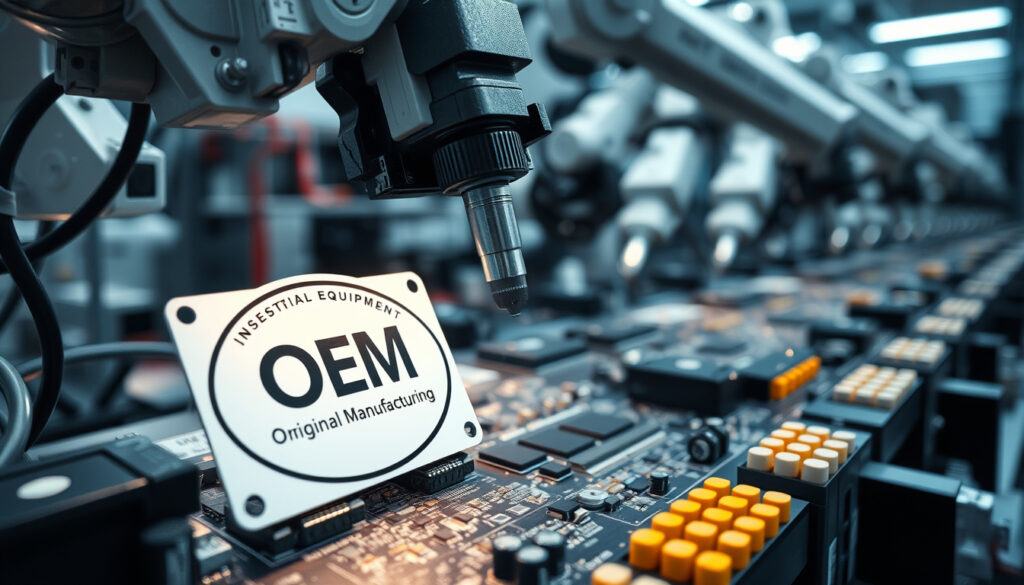
What Does OEM Mean? Definition, Uses, and Comparison
You’ve probably spotted the letters OEM on a car part box or a software license and wondered what they really stand for. The short answer is Original Equipment Manufacturer — but the full story stretches across cars, computers, medical devices, and even firearms.
OEM stands for: Original Equipment Manufacturer · OEM parts are made by: the same company that supplied the original part · OEM vs aftermarket price difference: OEM parts typically cost 20–40% more than aftermarket · OEMs in the top 10 worldwide: include Toyota, Bosch, and Siemens
Quick snapshot
- OEM stands for Original Equipment Manufacturer (Investopedia (financial dictionary))
- OEM replacement parts are made to match the fit and performance of original parts (Basil Cars (automotive dealer))
- Whether OEM parts are always higher quality than aftermarket alternatives (Titan Machinery (equipment distributor))
- Whether OEM software licenses can be transferred between devices (Titan Machinery (equipment distributor))
- Whether aftermarket parts match original safety standards — some are produced by third‑party manufacturers (Titan Machinery (equipment distributor))
- OEM remains the standard for warranty compliance in machinery and automotive contexts (Titan Machinery (equipment distributor))
- Aftermarket quality continues to improve, narrowing the gap with OEM parts in non‑critical applications
Six key facts that define OEM across industries:
| Label | Value |
|---|---|
| Full form | Original Equipment Manufacturer |
| Primary use | Manufacturing components for other companies’ products |
| Automotive meaning | Parts made by the vehicle’s original supplier |
| Cost difference vs aftermarket | 20–40% higher on average |
| Warranty status | Typically comes with a manufacturer warranty |
| Common misconceptions | OEM is not necessarily higher quality than aftermarket; it’s the same as original |
Is OEM the same as original?
OEM parts are identical to original parts
By definition, an OEM part is made by the same company that supplied the component when the product was first built. In automotive contexts, that means a replacement alternator from Denso is exactly the same part that came in your Toyota off the assembly line. Investopedia (financial dictionary) confirms that OEM stands for Original Equipment Manufacturer and that these components are produced by the original supplier.
When OEM and original differ
In some industries, “original” may refer to the brand name while the OEM contract is hidden behind the scenes. For example, a laptop may carry a Dell badge, but the keyboard inside could be made by an OEM like Lite-On. The Metalphoto of Cincinnati (industrial nameplate manufacturer) explains that Original Equipment (OE) refers to parts installed at the time of manufacture, while OEM replacement parts may be sold through value‑added resellers under a different brand name.
Why this matters: if you’re buying a replacement part for a car, OEM and original are usually the same. But for electronics, the OEM may not carry the label you recognize.
For safety‑critical parts like brake pads or steering components, OEM is the safe bet because it guarantees the same design tolerances as the factory. Aftermarket alternatives may fit, but they haven’t been validated by the carmaker.
The catch: for critical components, OEM eliminates guesswork — but for cosmetic or non-essential parts, aftermarket can work equally well.
Is it good to buy OEM products?
Advantages of OEM products
- Guaranteed fit – OEM parts are built to the original specifications. Basil Cars (automotive dealer) says they match the fit, performance, and quality of the parts installed when the vehicle was built.
- Warranty protection – Titan Machinery (equipment distributor) notes that OEM parts may come with a manufacturer warranty, which is often required to keep the original warranty intact.
- Peace of mind – You know exactly what you’re getting.
Disadvantages of OEM products
- Higher cost – OEM parts are typically 20–40% more expensive than aftermarket alternatives, according to Basil Cars (automotive dealer).
- Limited availability – Because they are produced by the original manufacturer, OEM parts can be harder to find than aftermarket ones.
- No performance upgrade – OEM parts replicate factory specs; they won’t improve performance compared to a high‑end aftermarket part.
When to choose OEM over aftermarket
For critical safety parts (brakes, steering, airbags) and items under warranty, OEM is the recommended route. Mercedes‑Benz of Temecula (dealership) warns that aftermarket parts may require minor adjustments to meet a specific car’s specifications, and they can vary widely in quality.
The trade-off: spending more upfront for reliability vs. saving money with a potential risk in fit or longevity.
OEM vs. Aftermarket Car Parts: What’s the Best Choice for Your Vehicle?
Four dimensions, one clear contrast:
| Criteria | OEM Parts | Aftermarket Parts |
|---|---|---|
| Cost | 20–40% higher (Basil Cars) | Generally lower, often 30–50% less |
| Quality & fit | Identical to original specifications (Basil Cars) | Varies by manufacturer; may need adjustments (Mercedes‑Benz of Temecula) |
| Warranty | Often includes manufacturer warranty (Titan Machinery) | May void vehicle warranty if used on covered systems |
| Availability | Can be harder to find (Basil Cars) | Widely available at auto parts stores |
The pattern: OEM guarantees factory‑spec performance and warranty coverage, but at a premium price. Aftermarket offers choice and savings, but with variable quality. Investopedia (financial dictionary) sums it up: aftermarket parts are not made by the original manufacturer, so verify the supplier’s reputation before buying.
What are OEM parts? The differences between OEM, ODM, and OBM
OEM (Original Equipment Manufacturer)
An OEM manufactures products to a buyer’s specifications. The buyer then sells those products under its own brand. This is the most common model in electronics and automotive supply chains.
ODM (Original Design Manufacturer)
An ODM designs and manufactures products that are rebranded by the buyer. For example, a laptop design created by a Taiwanese ODM may be sold under Dell, HP, and Lenovo labels. The buyer has less control over the original design.
OBM (Original Brand Manufacturer)
An OBM sells products under its own brand name, controlling both design and marketing. Samsung is an OBM for its own phones, while also acting as an OEM for Apple’s iPhone displays.
The implication: these three models affect pricing, quality control, and brand identity. For a buyer, OEM means you’re paying for the brand’s specification; OBM means you’re paying for the manufacturer’s own reputation; ODM sits in between.
What does OEM mean on a car?
OEM car parts explained
On a car, OEM means the replacement part comes from the same company that supplied the original part when the vehicle was new. Basil Cars (automotive dealer) states that OEM parts are identical in fit, form, and function to the originals.
OEM vs aftermarket in automotive
Aftermarket parts are made by third‑party companies and can work across different vehicle brands. Mercedes‑Benz of Temecula (dealership) says they may require minor adjustments to fit properly. OEM parts, on the other hand, bolt on without modification.
How to identify OEM parts
Look for the manufacturer’s branding, part numbers matching the vehicle’s specs, and packaging that references the car brand. Many dealerships sell OEM parts exclusively. Wikipedia (general reference) notes that OEM parts are often called “genuine” parts in the industry.
If you drive a high‑mileage car and plan to keep it for years, OEM parts preserve its original reliability. For a lease vehicle, aftermarket could save money without affecting trade‑in value — as long as the warranty isn’t compromised.
What this means: the choice between OEM and aftermarket often depends on whether you prioritize long-term reliability or short-term savings.
Upsides
- Guaranteed fit and compatibility
- Warranty protection
- Same performance as original
- No modification required
Downsides
- Higher cost (20–40% more)
- May be harder to find
- No performance improvement over original
- Limited selection for older vehicles
Quotes from the field
OEM is a term used in the manufacturing industry to describe companies that produce components or products that are then used in another company’s end product.
OEM means the part is exactly what came with the car from the factory.
Aftermarket parts are generally less expensive than OEM parts, but they can vary in quality and availability depending on the manufacturer.
Basil Cars (automotive dealer)
The common thread from all three sources: OEM equals factory exactness. When that matters most — safety, warranty, peace of mind — OEM is the clear choice. When budget is the priority, aftermarket can work, but buyer beware.
Related reading: How Long Do Car Batteries Last? · BMW X5 for Sale in Ireland 2025
Frequently asked questions
Is OEM counterfeit?
No. OEM is a legitimate manufacturing arrangement. Counterfeit parts are illegally sold as OEM but are not produced by the original manufacturer. Always buy from authorized dealers.
What does OEM mean in Windows?
An OEM Windows license is pre‑installed on a computer by the manufacturer. It’s tied to that specific hardware and is usually cheaper than a retail license, but it may have limited support options.
What does OEM mean in medical terms?
In medical devices, OEM refers to companies that manufacture components (e.g., sensors, pumps) that are integrated into larger medical equipment by brand‑name companies.
What does OEM mean in guns?
In firearms, OEM refers to parts made by the original manufacturer of the gun, such as a slide or barrel made by Glock that fits a Glock pistol.
Are OEM products worth buying?
For critical applications — car safety parts, medical devices, warranty‑sensitive equipment — yes. For general household items or consumables, aftermarket may offer better value.
What does OEM mean in business?
In business, an OEM is a company that produces goods that are sold under another company’s brand. It’s a common B2B arrangement in electronics, automotive, and industrial manufacturing.
Can I trust OEM parts?
Yes, because they are made by the original manufacturer to the buyer’s specifications. Always purchase from a reputable source to avoid counterfeits.
What does OEM mean in computer hardware?
OEM hardware components (e.g., memory, storage) are sold directly to PC manufacturers for assembly. They often lack retail packaging and may have shorter warranties than retail versions.
For the driver replacing a brake caliper, the OEM part is the only one that guarantees the same stopping force as the factory. For the DIY mechanic on a tight budget, an aftermarket part from a reputable brand can be a safe choice. The decision comes down to what you value: absolute reliability or lower cost. For the buyer in the United States, where automotive warranties are tightly regulated, choosing OEM for safety and emissions systems is the smartest move — or risk paying more in repairs later.
More related posts
 Isabella Ladera y Beele Video Viral: Lawsuit Filed 2025
 Yailin La Más Viral: Biography, Net Worth, and Controversies
 SCAD: Acceptance Rate, Cost, and Controversy Explained
 Deportivo Alavés vs Real Madrid Lineups: Predicted XI & 2-1 Result
 Venmo Customer Service Number: Phone, Chat & Support Hours
 Godfather of Harlem Characters – Full Cast and Roles
 Why Is Linzess Dangerous? Key Risks & Side Effects
 Nail Shops Near Me: Ireland Prices & Tipping Guide
