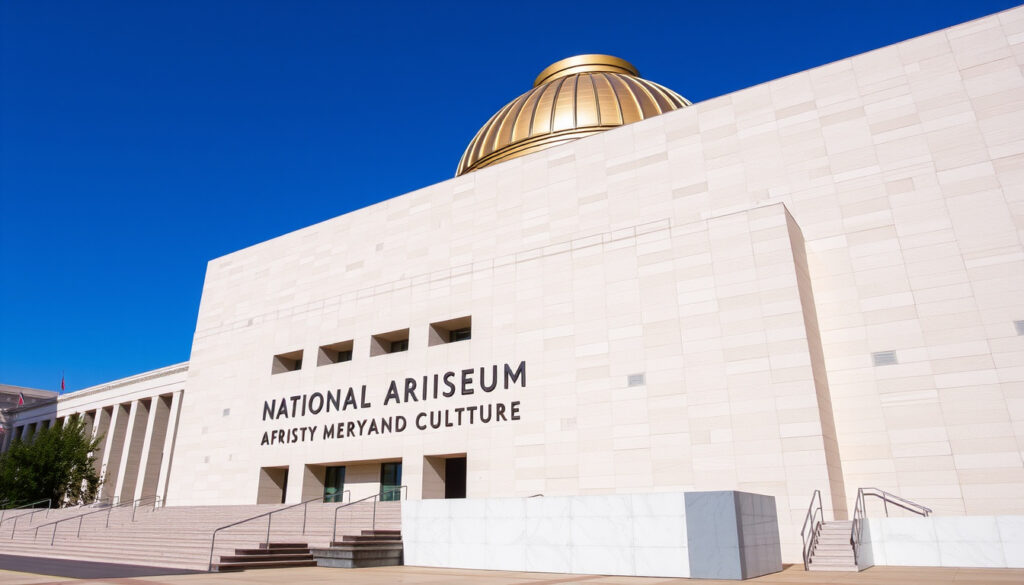
National Museum of African American History & Culture: Cost & Guide
If you’ve ever tried to book a timed-entry pass for the National Museum of African American History and Culture, you know the frustration: slots vanish within minutes, and the whole process feels like navigating a maze blindfolded. The good news is that once you understand how the system works, it’s entirely manageable. The museum opened in 2016 as the only national institution dedicated solely to African American history and culture, and it welcomed 1,092,552 visitors in 2022 alone. This guide cuts through the confusion to give you a practical blueprint for planning your visit.
Location: 1400 Constitution Ave NW, Washington, D.C. · 2022 Visitors: 1,092,552 · Institution: Smithsonian · Director: Lonnie G. Bunch III · Description: World’s largest museum dedicated to African-American history and culture
Quick snapshot
- Free admission with timed-entry passes (NMAAHC Official Site)
- Located on National Mall at Constitution Ave NW (Washington.org visitor guide)
- Part of Smithsonian Institution network (NMAAHC Official Site)
- Whether current shutdown rumors are accurate (no verified current status)
- Exact visit duration variability depending on exhibit engagement
- Museum opened to public: 2016 (Washington.org visitor guide)
- Group reservation system launched: March 13, 2018 (NMAAHC News announcement)
- Plan your visit by securing passes 30 days ahead (NMAAHC Official Site)
- Check calendar for docent-led tours (Washington.org visitor guide)
Here are the key details about the museum at a glance.
| Fact | Detail |
|---|---|
| Opened | 2016 |
| Address | 1400 Constitution Ave NW, Washington, D.C. 20004 |
| Parent Org | Smithsonian Institution |
| 2022 Attendance | 1,092,552 |
| Director | Lonnie G. Bunch III |
How much does it cost to visit the African American Museum in DC?
Admission to the National Museum of African American History and Culture is free, but timed-entry passes are required for all visitors regardless of age due to high demand. This policy ensures manageable crowds inside the building and protects the artifacts on display.
Timed entry passes
Advance timed-entry passes are released 30 days in advance on a rolling basis, according to the NMAAHC Official Site. Same-day passes become available online at 8:15 a.m. EST daily, though these are limited and competitive. Individuals can reserve up to nine free timed-entry passes per transaction.
- Advance passes: 30 days rolling window (NMAAHC Official Site)
- Same-day passes: released 8:15 a.m. EST daily (NMAAHC Official Site)
- Maximum per transaction: 9 passes (NMAAHC Official Site)
- Group threshold: 10 or more requires separate group passes (NMAAHC Official Site)
Additional fees
While museum admission is free, Dine and Shop passes for Sweet Home Café and the museum store are available separately. These passes are released seven days in advance, up to four per day, valid from 11:00 a.m. to 2:30 p.m. Third-party tour operators like Viator offer bundled tickets that include walking tours of DC landmarks alongside museum entry.
Being part of the Smithsonian means sharing the same timed-entry pass system as other popular museums. During peak seasons, competition for passes intensifies, so early planning becomes critical for visitors who have limited flexibility.
Is the African American Museum a part of the Smithsonian?
Yes. The National Museum of African American History and Culture is the nineteenth and newest museum of the Smithsonian Institution. It stands as the only national museum dedicated solely to African American history and culture, and it joined the Smithsonian network after decades of advocacy and planning.
Smithsonian affiliation
The Smithsonian Institution operates 21 museums, galleries, and the National Zoo across Washington, D.C., and New York. The NMAAHC is the only one among them that focuses exclusively on African American history and culture. The museum opened its doors in 2016 after President George W. Bush signed legislation in 2003 authorizing its creation.
What are the big three Smithsonian museums?
The most visited Smithsonian museums include the National Air and Space Museum, the National Museum of Natural History, and the National Museum of American History. The NMAAHC, while newer, has quickly become one of the most popular destinations on the National Mall, drawing over one million visitors annually before the pandemic.
Role in Smithsonian network
As a Smithsonian museum, the NMAAHC benefits from the institution’s infrastructure, research resources, and preservation expertise. The museum’s tagline, “A People’s Journey, A Nation’s Story,” reflects its mission to present unvarnished truths about African American history within the broader American narrative.
The implication: joining the Smithsonian network gave the NMAAHC access to decades of curatorial expertise and institutional credibility that would have taken years to build independently.
How long does it take to walk through the African American Museum in DC?
Most visitors spend two to four hours exploring the museum, though dedicated history enthusiasts could easily spend a full day. The museum’s galleries are organized chronologically from the bottom level covering slavery through the civil rights era, ascending to galleries focused on culture, sports, and modern achievements at the top.
Recommended visit duration
Timed-entry passes allow entry from the reserved time until 4:00 p.m., giving visitors a substantial window to explore. Groups receive a two-hour grace period beyond their pass time. According to visitor reviews compiled by travel guides, first-time visitors typically allocate at least three hours to feel they have adequately experienced the core exhibitions.
- Typical visit: 2-4 hours (based on visitor reviews)
- Full experience: up to full day for deep exploration
- Entry window: until 4:00 p.m. from reserved time (NMAAHC Official Site)
Self-guided vs full experience
The museum is designed for self-paced exploration, with exhibits arranged to guide visitors chronologically through African American history. One-hour docent-led tours are available based on availability, though visitors should check the calendar in advance to confirm schedules.
Peak time factors
Weekends and federal holidays tend to be the busiest times. Summer months and school vacation periods also see elevated crowds. Arriving early in your entry window provides more breathing room, especially near popular exhibits like the Emmett Till section and the Musical Crossroads gallery.
Veterans, active-duty military, and first responders who present valid ID at the door can bypass the competitive pass system entirely, gaining entry for themselves and up to four guests without weeks of advance planning.
For visitors with military service or first responder credentials, the door policy effectively removes the biggest barrier that frustrates most tourists: the timed-pass lottery.
What is Lonnie Bunch doing now?
Lonnie G. Bunch III, the founding director of the National Museum of African American History and Culture, is now serving as the Secretary of the Smithsonian Institution. He began this role in June 2019, becoming the first African American and first historian to lead the entire Smithsonian network.
Current role at Smithsonian
As Secretary, Bunch oversees all 21 Smithsonian museums, the National Zoo, and education and research centers across multiple states. His leadership continues to shape how the institution approaches diversity, inclusion, and public engagement with American history.
Leadership in NMAAHC
Bunch led the museum from its authorization through its opening in 2016, raising the necessary funds and assembling the curatorial team that designed the museum’s powerful chronological narrative. His work on the NMAAHC earned him numerous accolades, including the National Humanities Medal from President Barack Obama.
Contributions to the museum
Under Bunch’s direction, the museum secured key artifacts including items related to Emmett Till, Harriet Tubman, and Chuck Berry. He established partnerships with the National Park Service to create the Civil Rights Trail, connecting the museum to broader preservation efforts across the country.
“This free Smithsonian museum on the National Mall tells the story of America through the lens of African American history and culture.” — Washington.org (Tourism Guide)
Bunch’s dual role—founding director of NMAAHC and now Secretary of the Smithsonian—means his influence extends beyond a single building to shaping the entire national museum ecosystem.
Plan Your Visit | National Museum of African American History and Culture
Effective visit planning centers on understanding the pass system, transportation options, and what amenities are available on-site. The museum is fully accessible and located at 14th Street and Constitution Avenue NW on the National Mall.
Civil Rights Trail connection
The NMAAHC serves as a key anchor on the Civil Rights Trail, a network of sites managed by the National Park Service that spans historic locations from Alabama to Washington, D.C. Visitors interested in combining museum visits with broader civil rights history can access resources through the Civil Rights Travel website.
Virtual tour options
The museum offers virtual programming and online resources for those who cannot visit in person. These include recorded gallery tours, oral history collections, and educational materials for classroom use. While nothing replaces the in-person experience, the virtual offerings provide meaningful access to the museum’s collections.
Internship and reviews
The museum operates internship programs for students and early-career professionals interested in museum studies, curatorial work, and education. Visitor reviews, available through platforms like TripAdvisor and Google, consistently praise the Musical Crossroads exhibit and the chronological design, though some note that the timed-pass process can be frustrating.
- Metro access: Federal Triangle or Smithsonian stations (Blue, Orange, Silver lines)
- Entrances: Madison Drive or Constitution Ave. NW
- Operating hours: Tuesday-Sunday 10:00-17:30, Monday 12:00-17:30
- Closed: December 25
- Accessibility: Fully accessible (Washington.org visitor guide)
Upsides
- Free admission to world-class museum
- Chronicled narrative of African American history
- Smithsonian infrastructure and preservation standards
- Military and first responder accommodations
- Virtual access options available
Downsides
- Timed-entry passes can be difficult to secure
- Same-day passes very limited
- Peak seasons see heavy crowds
- Group passes require months of advance planning
“A People’s Journey, A Nation’s Story.” — NMAAHC (Official Tagline)
Related reading: Godfather of Harlem characters · Empire of the Sun true story
wonderfulmuseums.com, wonderfulmuseums.com, civilrightstravel.com, tiqets.com, tickets.si.edu, viator.com, juliantours.com, getyourguide.com, nmaahc.si.edu
Frequently asked questions
What is the most expensive thing at the Smithsonian?
The Smithsonian Institution does not publicly rank artifacts by monetary value, but the collection includes priceless historical objects like the original Star-Spangled Banner, the Hope Diamond, and numerous original documents from American history. The NMAAHC holds significant artifacts like Harriet Tubman’s shawl and Emmett Till’s casket marker, which hold incalculable cultural worth.
Does the National Museum of African American History and Culture offer photos?
Photography for personal, non-commercial use is generally permitted in most galleries. Flash photography, tripods, and selfie sticks are prohibited. Some exhibits may have specific restrictions noted at their entrances.
What is the National Museum of African American History and Culture Emmett Till exhibit?
The Emmett Till exhibit is part of the Making a Way gallery on the civil rights era. It includes the original casket marker and documents related to Till’s 1955 murder in Mississippi, whose trial became a catalyst for the civil rights movement. The museum acquired these items after years of advocacy by Till’s relatives.
Is there a virtual tour of the National Museum of African American History and Culture?
The museum offers virtual programming including recorded gallery walks and oral history interviews with curators and community members. These resources are available through the museum’s website and provide meaningful access to the collections for remote visitors.
What are reviews for the National Museum of African American History and Culture?
Visitor reviews on platforms like TripAdvisor, Google, and Yelp are overwhelmingly positive, praising the museum’s powerful storytelling, diverse exhibits, and the Musical Crossroads gallery. Common criticisms center on the difficulty of securing timed-entry passes and crowds during peak seasons.
Does the National Museum of African American History and Culture have an internship program?
Yes. The museum offers internships for undergraduate students, recent graduates, and early-career professionals. These positions span curatorial, education, operations, and research departments. Applications are accepted through the Smithsonian’s centralized internship portal.
Who is the curator of the National Museum of African American History and Culture?
The museum has multiple curators specializing in different eras and themes. Kevin West is the museum’s director of strategic content and curatorial affairs. Specific exhibitions often have designated curators; for example, the Emmett Till exhibit was developed under the direction of the museum’s civil rights gallery team.
What is the logo of the National Museum of African American History and Culture?
The museum’s logo features a stylized diamond shape composed of geometric patterns in bronze, gold, and brown tones, inspired by African American ironwork from the South. The design, created by the firm Sibley Associates, reflects the craftsmanship traditions highlighted throughout the building’s exterior.
For visitors planning a trip to Washington, D.C., the choice is straightforward: prioritize securing your timed-entry passes at least 30 days ahead, or commit to being online at 8:15 a.m. EST the day of your visit. Once inside, the museum rewards those who approach it with time and intention, offering a narrative that is at once deeply personal and profoundly national.
More related posts
 SSI April 2025 Payment Date: Full Schedule from SSA
 Full Synthetic Oil Change – Cost, Benefits, Frequency Guide
 Indiana Jones and the Last Crusade: The Final Film That Wasn’t
 Ravyn Lenae Love Me Not: Lyrics, Release & Chart Rise
 Who Drafted Shedeur Sanders? Browns Pick QB in 5th Round
 Hobby Lobby Black Friday 2026: Deals, Discounts & Store Hours
 How Many Days Until May 23? 21-Day Live Countdown 2026
 Hot Tubs for Sale in Ireland: A Complete Buying Guide
