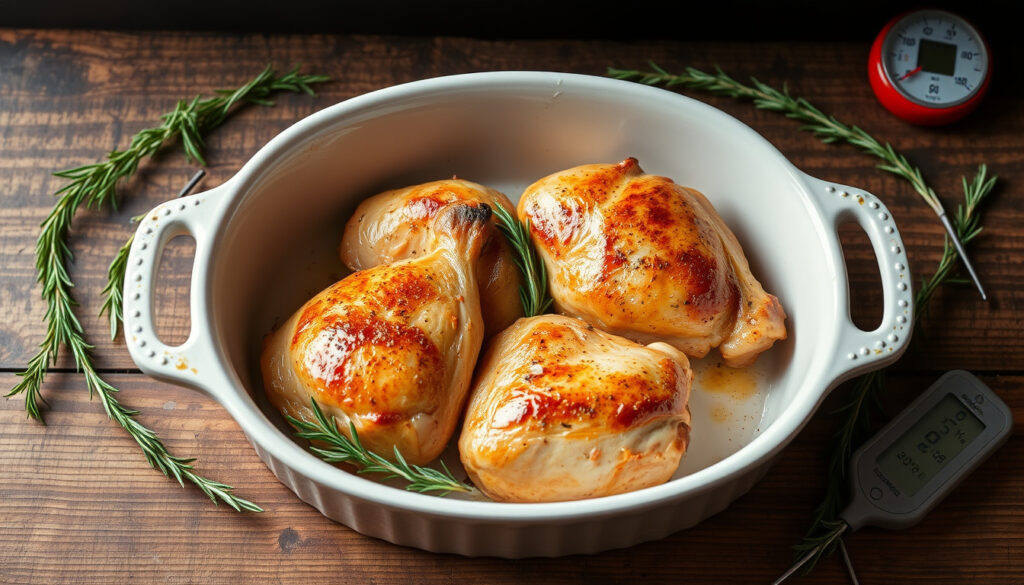
Chicken Thighs in Oven – Complete Time and Temp Guide
Oven-baked chicken thighs deliver a perfectly balanced result: crispy, golden skin on the outside while the meat stays juicy and tender within. This cooking method works whether you prefer bone-in skin-on thighs or boneless skinless cuts, and it requires only basic equipment found in any kitchen. Understanding the right combination of temperature and timing makes all the difference between a memorable dinner and an overcooked, dry mess.
Chicken thighs are darker cuts that naturally contain more fat than chicken breasts, which means they can withstand higher temperatures without drying out. This quality makes them forgiving for home cooks while still rewarding attention to detail. Professional chefs often favor thighs for their flavor and reliability, and the same principles apply equally well in a home oven.
This guide covers everything from precise timing charts for different thigh types to techniques for achieving that coveted crispy skin, along with essential safety information to ensure your meal is both delicious and safe to eat. For those interested in expanding their repertoire, Caribbean Food Near Me offers regional inspiration for spice blends and side dishes that pair beautifully with baked chicken. Meanwhile, the What Is the Pink Salt Trick technique demonstrates how professional kitchens approach seasoning and curing for enhanced flavor profiles.
How Long and at What Temperature to Bake Chicken Thighs?
The two most critical factors when baking chicken thighs are oven temperature and total cooking time. These variables depend largely on whether your thighs are bone-in or boneless, and whether they have skin on. Using a meat thermometer rather than relying solely on timing helps account for differences in oven consistency, thigh size, and starting temperature.
- Crispy results come from cooking uncovered at 375°F or higher
- Always verify doneness with a meat thermometer reading 165°F minimum
- Patting thighs completely dry before seasoning is essential for skin crispiness
- Bone-in thighs retain moisture better than boneless cuts
- Let rested thighs stand five minutes before serving for juicier texture
- Oven temperatures vary—yours may cook faster or slower than averages suggest
| Thigh Type | Oven Temp (°F) | Average Time | Internal Temp |
|---|---|---|---|
| Bone-in skin-on | 350 | 40–55 min | 165°F–175°F |
| Bone-in skin-on | 375 | 35–50 min | 165°F–175°F |
| Bone-in skin-on | 400 | 30–45 min | 165°F–185°F |
| Bone-in skin-on | 425 | 25–45 min | 165°F–175°F |
| Bone-in skin-on | 450 | 22–28 min | 170°F |
| Boneless skinless | 350 | 40 min | 175°F |
| Boneless skinless | 375 | 30–35 min | 175°F |
| Boneless skinless | 400 | 20–25 min | 175°F |
| Boneless skinless | 425 | 18–30 min | 175°F |
| Frozen bone-in | 400 | 50–60 min | 165°F |
How to Get Crispy Skin on Oven-Baked Chicken Thighs
Achieving crispy, golden-brown skin on oven-baked chicken thighs comes down to moisture removal and fat rendering. The skin contains a layer of fat that must render properly to create that satisfying crunch. Several techniques work together to maximize crispiness.
Prepping Thighs for Maximum Crispiness
Before anything else, pat the thighs completely dry with paper towels. Any moisture on the skin creates steam during cooking, which prevents browning. For best results, uncovered thighs should be placed skin-side up on a rack set over a baking sheet. This elevation allows air circulation around all sides of the thigh, promoting even crisping rather than steaming in accumulated juices. According to Cook’s Illustrated testing, this rack method produces significantly better skin texture than cooking directly on a pan.
After the initial bake, switch your oven to broil for the final 1–3 minutes. Watch constantly to avoid burning—the skin can go from perfect to charred in under a minute. This finishing step delivers restaurant-quality browning without any special equipment.
A light coating of high-smoke-point oil like avocado or olive oil helps the skin crisp and prevents sticking. The oil also aids in conducting heat evenly across the surface. Season generously on both sides, though the seasoning on the skin side contributes most to flavor and appearance.
Should You Cover Chicken Thighs While Baking?
The choice between covered and uncovered baking depends entirely on your priority. Leaving thighs uncovered allows moisture to escape and the skin to render and crisp. Covering the pan traps steam, which softens the skin and keeps the meat extremely moist but without that appealing texture contrast.
For most occasions, uncovered baking at temperatures between 375°F and 425°F produces the best combination of crispy skin and tender meat. Only cover if you specifically prefer softer skin and maximum moisture retention.
Simple Oven-Baked Chicken Thighs Recipe and Seasonings
A straightforward approach yields excellent results without complicated ingredients or techniques. The method requires minimal active cooking time, making it practical for weeknight dinners as well as more elaborate occasions.
Basic Seasoning Blend
Start with salt, which draws moisture to the surface and then dissolves it, creating a drier foundation for crisping. Black pepper adds foundational warmth, while garlic powder provides savory depth without the risk of burning that whole garlic cloves present. Paprika contributes color and subtle sweetness, and onion powder rounds out the savory profile.
Fresh thyme and rosemary work beautifully with chicken thighs, adding aromatic complexity. Sprinkle these herbs over the seasoned thighs just before baking, or place whole sprigs beneath the thighs on the rack for gentle flavor infusion during cooking.
Drizzle the thighs lightly with oil after seasoning, then arrange them skin-side up on a rack set inside a rimmed baking sheet. Discard any remaining pan juices after cooking, or save them for making a simple pan sauce or gravy. The bones make excellent additions to homemade broth if you prefer bone-in thighs.
Best Seasonings for Oven Chicken Thighs
Beyond the basics, numerous spices complement chicken without overwhelming its natural flavor. Cumin and chili powder add southwestern flair, while Italian seasoning blends work for Mediterranean-inspired meals. Cajun seasoning creates a spicier profile, and curry powder transforms the dish entirely.
For a sweeter finish, brown sugar blended with the salt creates a caramelized crust that many home cooks favor. Honey brushed on during the last few minutes of cooking adds glossy sweetness without the effort of making a separate glaze.
Chicken Thigh Internal Temperature and Safety Tips
Food safety ranks as the most important consideration when cooking any poultry. Unlike leaner cuts, chicken thighs tolerate higher temperatures without becoming dry, which gives cooks some flexibility in achieving both safety and optimal texture.
USDA Safety Standards for Chicken
The United States Department of Agriculture establishes 165°F as the minimum safe internal temperature for chicken. At this temperature, harmful pathogens including salmonella are destroyed within seconds. USDA food safety guidelines emphasize using a properly calibrated meat thermometer inserted into the thickest part of the thigh without touching bone for accurate readings.
Many experienced cooks recommend pulling thighs at 175°F–185°F for optimal texture. The higher fat content in dark meat protects against dryness at these temperatures, producing juicier results than stopping at the bare minimum of 165°F.
Testing the thickest part of the thigh away from bone gives the most accurate reading. Digital instant-read thermometers provide the quickest results, while oven-safe probe thermometers allow monitoring throughout cooking without opening the oven door.
Baking Frozen Chicken Thighs
The USDA recommends thawing chicken safely before cooking using refrigerator thawing, cold water immersion with water changes every 30 minutes, or microwave thawing for immediate use only. Baking frozen thighs directly presents risks because the exterior can reach safe temperatures while the interior remains undercooked, creating a food safety hazard.
If cooking from partially frozen, add approximately 50% more time to your recipe and verify the internal temperature reaches 165°F before consuming. Some sources document extended baking times for frozen bone-in thighs at around 50–60 minutes at 400°F, but proper thawing remains the safest approach.
Step-by-Step Process for Baking Chicken Thighs
Following a clear sequence ensures consistent results whether you’re cooking thighs for the first time or the hundredth time. The process involves preparation, cooking, and rest periods that all contribute to the final outcome.
- Remove thighs from refrigerator 20–30 minutes before cooking to bring them toward room temperature
- Preheat oven to desired temperature between 375°F and 425°F
- Pat thighs completely dry with paper towels on both sides
- Drizzle with oil and apply seasoning blend generously on all surfaces
- Place thighs skin-side up on a rack set over a rimmed baking sheet
- Bake for recommended time based on thigh type and chosen temperature
- Check internal temperature with meat thermometer—target 165°F minimum, 175°F–185°F for best texture
- Let thighs rest 5 minutes before serving to allow juices to redistribute
What Is Known for Certain and What Remains Unclear
When researching oven-baked chicken thighs, certain facts remain consistently documented across sources, while other details show variation depending on methodology and source.
| Established Information | Information That Varies |
|---|---|
| 165°F is the USDA minimum safe temperature | Exact times vary by oven calibration and thigh size |
| Uncovered baking produces crispier skin | Optimal rest time recommendations range from 3–10 minutes |
| Drying thighs before cooking improves skin texture | Whether to flip thighs midway through cooking divides expert opinion |
| Bone-in thighs cook slower than boneless cuts | Specific calorie counts vary significantly by size and preparation |
| High-heat finishing enhances browning | Ideal seasoning ratios depend entirely on personal preference |
Why Chicken Thighs Work Well for Oven Baking
Chicken thighs come from the dark meat portion of the bird, which contains more myoglobin and fat than chicken breasts. This higher fat content means the meat remains juicy even when cooked to higher internal temperatures that would dry out leaner cuts.
The bone in bone-in thighs serves as an insulator that helps regulate temperature throughout the meat, reducing the risk of overcooking the outer portions while waiting for the interior to reach safe temperatures. This self-regulating quality makes bone-in thighs more forgiving for less experienced cooks.
Skin-on thighs provide the additional benefit of natural basting—the fat renders from the skin and drips down over the meat during cooking, building flavor and moisture simultaneously. Removing the skin entirely after cooking still allows you to capture these benefits while reducing overall fat content if desired.
Expert Sources and Guidelines
The USDA states that poultry should reach 165°F internally to ensure safety against harmful bacteria. This temperature applies regardless of cooking method, though the actual time needed to reach this temperature varies significantly based on starting temperature, thigh size, and oven consistency.
Professional testing and recipe development consistently show that patting chicken completely dry before seasoning ranks among the most impactful steps for achieving crispy skin. Combined with uncovered baking at temperatures of 375°F or higher, this preparation method delivers reliable results across different oven types and brands.
SUMMARY
Oven-baked chicken thighs succeed when you balance temperature, time, and technique. Bone-in skin-on thighs typically require 30–55 minutes at temperatures between 350°F and 450°F, while boneless skinless thighs cook faster at 18–40 minutes. Always verify doneness with a meat thermometer, targeting at least 165°F internally. Cooking uncovered at 375°F or higher, combined with thorough drying before seasoning, produces the crispy skin that makes this dish so satisfying.
Frequently Asked Questions
How many calories are in baked chicken thighs?
A 6-ounce bone-in skin-on chicken thigh contains approximately 250–350 calories, with exact numbers varying based on size and preparation method. Removing the skin reduces calories significantly, with boneless skinless thighs averaging 180–250 calories per serving.
What internal temperature should chicken thighs reach?
Chicken thighs should reach at least 165°F internally according to USDA guidelines. However, many cooks recommend pulling thighs at 175°F–185°F because the higher fat content prevents drying while improving texture and juiciness.
Should I flip chicken thighs halfway through baking?
Flipping is optional. Baking skin-side up throughout cooking typically produces excellent results. Some cooks flip once at the halfway point for more even browning, but this is not required for crispy skin.
Can I use aluminum foil instead of a rack?
Aluminum foil alone traps steam and softens skin, working against crispiness goals. If using a baking sheet without a rack, flip thighs midway through cooking to allow both sides to release moisture, though results won’t match rack-style cooking.
What sides pair well with oven-baked chicken thighs?
Roasted vegetables, mashed potatoes, rice pilaf, or a fresh green salad complement baked chicken thighs nicely. The pan drippings make an excellent base for quick sauces or gravies if you skip the rack method.
How do I store leftover baked chicken thighs?
Refrigerate leftover thighs within two hours of cooking in airtight containers. They keep for 3–4 days refrigerated. Reheat gently at 325°F until reaching 165°F internally, or enjoy cold in salads and sandwiches.
Why did my chicken thighs turn out tough?
Tough texture usually results from overcooking or insufficient rest time. The muscle fibers in chicken tighten when heated too long, and cutting into thighs before resting allows juices to escape. Using a thermometer helps prevent this issue.
More related posts
 Heretic (2024): Plot, Twist, and Butterfly Symbolism
 The War Between the Land and the Sea: BBC Miniseries Guide
 Trump and Ep tein Photo : What We Know and What’ Unclear
 70 Kg to Lbs – Exact Conversion Chart and Formula
 What Does a Spider Bite Look Like? Symptoms & Care
 New Jurassic Park Movie – Jurassic World Rebirth Explained
 Boiling Point of Water: Temperature, Altitude, and Purity Effects
 Bonnie Blue 1000 Men: Documentary Record and Facts
