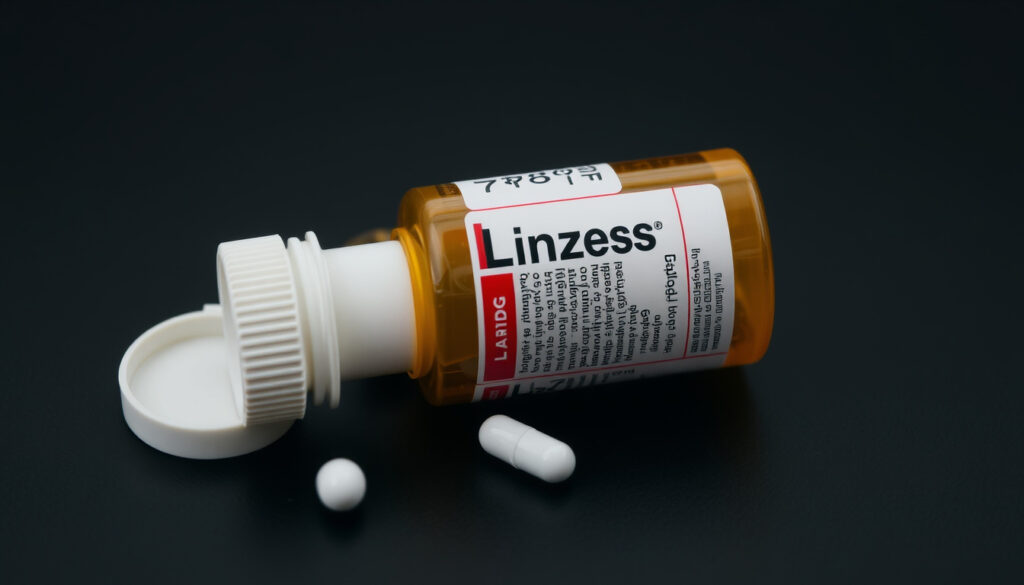
Why Is Linzess Dangerous? Key Risks & Side Effects
Anyone who’s searched for constipation relief has probably seen the ads for Linzess — a daily pill that promises to get things moving — but the same drug that helps many people also carries a serious FDA warning, and the side effects can be more intense than expected. This article separates the real dangers from the manageable risks, so you can make an informed choice about your treatment options.
FDA Black Box Warning: Yes, for risk of severe dehydration in children under 2 (FDA approval announcement) · Common Adverse Event: Diarrhea reported in up to 20% of patients (LINZESS patient information) · Medication Class: Guanylate cyclase-C agonist (secretagogue) · Approved Indications: IBS-C and Chronic Idiopathic Constipation (CIC) · Typical Dosage: 145 mcg or 290 mcg once daily
Quick snapshot
- Guanylate cyclase-C agonist (FDA label archive)
- Secretagogue (FDA label archive)
- Prescription only (LINZESS patient information)
- Increases fluid secretion in intestines (LINZESS patient information)
- Accelerates bowel transit time (LINZESS patient information)
- Reduces pain receptor activity (FDA label archive)
- Severe diarrhea (LINZESS patient information)
- Dehydration (FDA)
- Electrolyte imbalance (Healthline (medical review platform))
- Start with low dose (Linzess HCP safety page)
- Stay hydrated (LINZESS patient information)
- Avoid high-fat meals (LINZESS patient information)
The table below summarizes key prescribing facts drawn from FDA and manufacturer sources.
| FDA Warning | Black Box Warning for children under 2 (FDA) |
|---|---|
| Most Common Side Effect | Diarrhea (20% of patients) (LINZESS patient information) |
| Average Response Time | Within first week of treatment (FDA label archive) |
| Dosage Forms | 145 mcg and 290 mcg capsules (LINZESS patient information) |
Is Linzess a high risk medication?
Yes — Linzess carries an FDA Black Box Warning, the agency’s strictest safety alert, because of the risk of severe dehydration in children under 2 years old. The warning was based on deaths in neonatal mice exposed to linaclotide (U.S. Food and Drug Administration (agency)). Linzess is not approved for use in pediatric patients under 6, and the boxed warning explicitly states it should never be given to children younger than 2.
FDA Black Box Warning explained
- The boxed warning is triggered by deaths from dehydration observed in neonatal mice (FDA approval announcement).
- If severe diarrhea occurs, patients should stop Linzess and seek rehydration immediately (FDA label archive (official prescribing information)).
The implication: the risk is not theoretical — it’s grounded in animal data that prompted the strongest possible labeling requirement.
Risk of severe dehydration
- Severe diarrhea leads to dehydration and electrolyte imbalance, especially in vulnerable populations (LINZESS patient information (manufacturer)).
- The FDA label reports that fecal incontinence and dehydration, though less frequent, can occur (FDA label archive).
Linzess is not a “mild” laxative — it actively increases fluid secretion, and when that effect goes too far, the consequence can be rapid fluid loss requiring medical intervention.
The pattern: the FDA warning targets the youngest patients, but the mechanism — accelerated fluid secretion — applies to all ages and demands respect.
What are the worst side effects of Linzess?
Common side effects: diarrhea, bloating
- Diarrhea is the most frequently reported adverse event, occurring in up to 20% of IBS-C patients (LINZESS patient information).
- Gas, abdominal pain, and abdominal distention are also listed as common (LINZESS patient information).
Serious side effects: dehydration, electrolyte imbalance
- Severe diarrhea can lead to dehydration, electrolyte imbalances, and hypotension (Healthline (medical review platform)).
- A manufacturer safety page reports severe diarrhea in 2% of IBS-C patients on 290 mcg (Linzess HCP safety page (manufacturer clinical data)).
Rare side effects: viral infections
- In clinical trials, viral infections such as nasopharyngitis and upper respiratory tract infections were reported in about 3–5% of patients (Medical News Today (health journalism)).
The most dangerous side effect is not diarrhea itself but the cascade: fluid loss → electrolyte disturbance → renal impairment. Patients with compromised kidney function face a higher risk.
The catch: even at prescribed doses, the secretory mechanism can overshoot, turning a therapeutic effect into a medical event.
Who should not take Linzess?
Contraindications for use
- Patients with known or suspected mechanical gastrointestinal obstruction should not take Linzess (FDA).
- Linzess is contraindicated in children under 2 years old (FDA).
Pediatric warning
- The FDA approved Linzess for pediatric functional constipation in children 6–17 only on 2023-06-12 (FDA).
- The boxed warning remains for children under 2, and animal data drove the restriction (FDA).
Interaction with other medications
- Consult a doctor before combining Linzess with other laxatives or antidiarrheal drugs (LINZESS patient information (manufacturer)).
- No known major drug interactions, but because Linzess increases fluid secretion, adding diuretics may amplify dehydration risk (WebMD (drug reference)).
The takeaway: anyone with a history of bowel obstruction, severe kidney disease, or who is caring for a child under 2 should avoid Linzess entirely.
How long can you stay on Linzess?
Long-term use considerations
- Linzess is approved for long-term use for CIC and IBS-C in adults (LINZESS patient information).
- Clinical trials have followed patients for up to 52 weeks, though long-term effects beyond 2 years are not well documented (FDA label archive).
Side effect management over time
- Diarrhea often improves within the first few weeks of treatment (LINZESS patient information).
- The majority of diarrhea cases begin within the first 2 weeks, per FDA trials (FDA label archive).
Doctor monitoring
- Regular follow-ups are recommended to monitor for severe diarrhea, weight changes, and electrolyte levels (Verywell Health (health journalism)).
- A manufacturer PDF instructs patients with severe abdominal pain plus bloody or black stools to seek emergency care (RxAbbVie PDF (manufacturer safety sheet)).
The pattern: long-term data is limited to one year, making extended use a monitoring-dependent decision.
What is a natural alternative to Linzess?
Dietary fiber and hydration
- Fiber supplements like psyllium can be effective for constipation (Healthline (nutrition journalism)).
- Adequate hydration is essential for bowel regularity (Mayo Clinic (medical institution)).
Natural laxatives: prunes, senna
- Prune juice is a traditional natural remedy with sorbitol and fiber (WebMD (health reference)).
- Senna-based teas are used as short-term stimulant laxatives (PMC (peer-reviewed research)).
Lifestyle changes: exercise, routine
- Regular physical activity improves bowel motility (Johns Hopkins Medicine (academic medical center)).
- Setting a consistent bathroom routine can help with chronic constipation (Healthline).
The implication: while natural alternatives exist, they typically lack the potency of Linzess for moderate-to-severe cases.
The table below compiles the prescribing specifications that inform clinical decisions about Linzess.
| Drug class | Guanylate cyclase-C agonist (secretagogue) (FDA label archive) |
|---|---|
| Mechanism | Increases intestinal fluid secretion and accelerates transit (LINZESS patient information) |
| Onset of action | Within first week; most diarrhea starts in first 2 weeks (FDA label archive) |
| Half-life | Not measurable (acts locally in gut) (FDA label archive) |
| Indications | IBS-C (adults), CIC (adults), pediatric functional constipation (6-17) (FDA) |
| Contraindications | Mechanical GI obstruction, children under 2, known hypersensitivity (FDA) |
| Black box warning | Severe dehydration risk in children under 2 (FDA) |
| Common adverse events | Diarrhea, abdominal pain, gas, bloating (LINZESS patient information) |
| Dosage forms | 145 mcg, 290 mcg capsules (LINZESS patient information) |
| Manufacturer | Ironwood Pharmaceuticals / AbbVie |
Confirmed facts
- Linzess causes diarrhea in a significant portion of patients (LINZESS patient information)
- Linzess carries an FDA Black Box Warning for pediatric use (FDA)
- Linzess is effective for CIC and IBS-C (LINZESS patient information)
- Diarrhea usually begins within the first 2 weeks (FDA label archive)
- Severe diarrhea can lead to dehydration and electrolyte imbalance (Healthline (medical review platform))
What’s unclear
- Long-term effects beyond 2 years of use
- Exact prevalence of rare side effects like viral infections
- Whether the dehydration risk is relevant in adults at standard doses
Quotes from medical sources
“Linzess should not be used in children younger than 2 years old. Severe diarrhea can cause dehydration, which can be life-threatening in this age group.”
— FDA (U.S. drug regulator)
“The most common side effect of Linzess is diarrhea, which can be severe. If you have severe diarrhea, stop taking Linzess and contact your healthcare provider right away.”
— LINZESS patient information (manufacturer)
“Linzess carries a boxed warning for the risk of severe dehydration in children under 2. This is the most serious warning the FDA can issue.”
“Natural alternatives like fiber supplements, prune juice, and increased hydration are often effective for constipation and do not carry the same risk of severe diarrhea.”
— Healthline (health journalism)
For patients evaluating Linzess, the risk-benefit calculus hinges on age, bowel history, and the ability to manage side effects. The FDA warning is real, but for many adults without contraindications, the drug works. The choice comes down to monitoring: stay hydrated, start low, and watch for the first two weeks. For those who prefer a lower-risk path, natural approaches like fiber, prunes, and daily movement offer meaningful alternatives without the boxed warning — but every patient should discuss these options with their prescribing clinician first.
For a comprehensive breakdown of the regulatory concerns, check out this detailed overview of Linzess FDA warnings and key risks.
Frequently asked questions
Is diarrhea from Linzess dangerous?
In most adults, diarrhea is manageable, but severe diarrhea can lead to life-threatening dehydration. Stop the drug and call your doctor if diarrhea becomes uncontrollable.
Can Linzess cause weight loss?
Weight loss is not a common side effect, but persistent diarrhea can cause fluid loss and temporary weight reduction. If weight loss occurs, it may indicate a need for hydration or dose adjustment.
What does Linzess do to your body?
Linzess increases fluid secretion into the intestines, which softens stool and stimulates bowel movements. It also reduces pain signaling in the gut.
How quickly does Linzess work?
Most patients have a bowel movement within the first 24–48 hours. Full response may take up to a week, with diarrhea often appearing in the first two weeks.
Can I stop taking Linzess suddenly?
Yes, there are no withdrawal effects. Constipation symptoms may return. Always consult your doctor before stopping any prescription medication.
Does Linzess interact with alcohol?
No known drug interaction, but alcohol can dehydrate you, potentially worsening Linzess-related dehydration. Moderate use should be discussed with your doctor.
Is Linzess safe for older adults?
Older adults may be more vulnerable to dehydration. Doctors typically start at a lower dose and monitor kidney function and electrolyte levels.
More related posts
 What Does a Spider Bite Look Like? Symptoms & Care
 Hand, Foot and Mouth Disease Treatments – Symptom Relief and Stages Guide
 John Bell (Scottish Actor): Biography, Age & Career
 Blue Fugates: The True Story of Kentucky’s Blue People
 Boiling Point of Water: Temperature, Altitude, and Purity Effects
 Rate of Change Formula: Definition, Calculation, and Examples
 Aldi Ad This Week: Weekly Leaflet & Special Offers Online
 Nestle Chocolate Chip Cookie Recipe (1939 Original)
