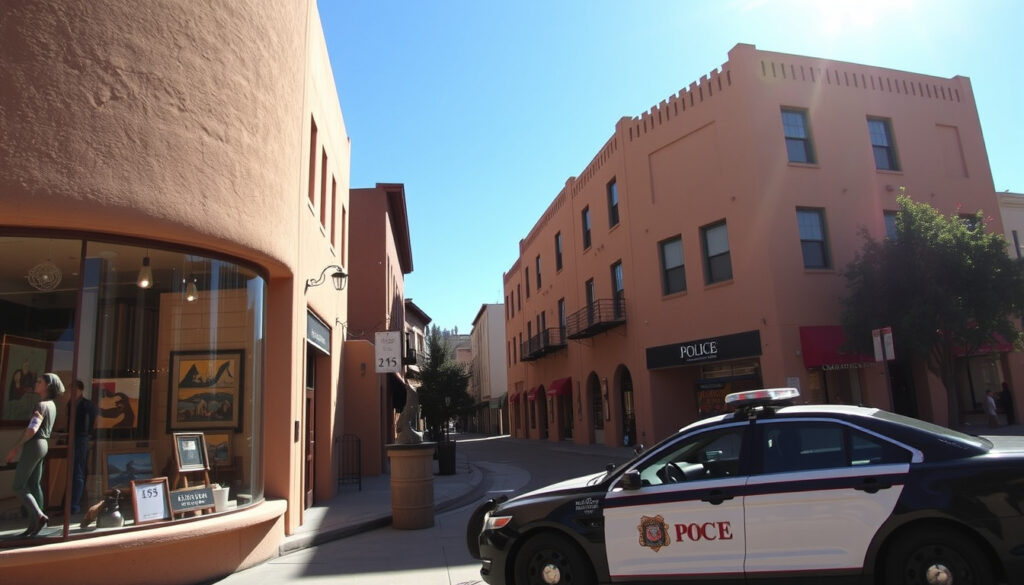
Santa Fe New Mexican: City Guide to Art, Cost & Safety
There’s a reason Santa Fe keeps showing up on "best of" lists year after year—and it’s not just the green chile. As the oldest state capital in the United States, founded in 1610 Santa Fe New Mexico tourism office, this high-desert city blends Pueblo, Spanish, and Territorial architecture with a world-class art scene that draws over 2 million visitors annually.
Population (2023 est.): ~90,000 ·
Elevation: 7,199 ft (2,194 m) ·
Founded: 1610 ·
Median Home Price (2025): $500,000 ·
Annual Visitors: Over 2 million ·
Oldest Newspaper in the West: The Santa Fe New Mexican (est. 1849)
Quick snapshot
- Santa Fe is the oldest state capital in the U.S. (Santa Fe New Mexico)
- The Santa Fe New Mexican was founded in 1849 (Santa Fe New Mexico)
- Population approximately 90,000 (United Van Lines moving guide)
- Exact future cost-of-living trends depend on economic factors (ERI cost index)
- Crime rates can fluctuate year to year (Tripadvisor traveler forum)
- Cost-of-living comparisons vary; one report suggests Santa Fe is 151% more expensive than other NM areas (Colonial Van Lines)
- The Santa Fe New Mexican has been publishing since 1849 (Santa Fe New Mexican)
- Bon Traveler guide updated 2026 (Bon Traveler)
- Cost-of-living articles from 2023 and 2026 show rising housing costs (United Van Lines)
- Continued growth in tourism and arts economy (Santa Fe New Mexico)
- Housing affordability will remain a challenge for newcomers (Val Brier Group)
- Digital edition of the Santa Fe New Mexican expands readership (Santa Fe New Mexico)
Ten key facts about Santa Fe, one pattern: it’s a city where history, altitude, and affordability all intersect in unique ways.
| Label | Value |
|---|---|
| State | New Mexico |
| County | Santa Fe County |
| Founded | 1610 (oldest state capital in the U.S.) |
| Population (2023 est.) | ~90,000 (city); ~155,000 (metro) |
| Elevation | 7,199 ft (2,194 m) |
| Area | 52.3 sq mi (135.5 km²) |
| Average January High | 44°F (7°C) |
| Average July High | 85°F (29°C) |
| Annual Visitors | Over 2 million |
| Newspaper | The Santa Fe New Mexican (est. 1849) |
The trade-off: You get a stunning setting and cultural depth, but you’ll pay for it—both in cash and in adjustment to the altitude.
What is Santa Fe New Mexican?
History of the newspaper
- The Santa Fe New Mexican was founded in 1849, making it the oldest newspaper in the Western United States Santa Fe New Mexican website.
- It has been covering local news, arts, sports, science, and politics in Santa Fe and Northern New Mexico for over 175 years.
Digital edition and mobile app
- The eNewMexican digital edition replicates the print layout and is accessible online.
- The newspaper offers a mobile app available on Google Play for on-the-go reading.
Editorial focus and reputation
- The paper is known for its in-depth coverage of local government, Native American affairs, and the arts scene.
- It holds a strong regional authority as the primary daily newspaper for Northern New Mexico.
Bottom line: The Santa Fe New Mexican is what local journalism looks like when it survives and adapts—digital edition included. For residents: your primary news source. For visitors: a window into what locals actually care about.
The implication: This newspaper defines the city’s conversation, from Plaza politics to Canyon Road gallery openings.
Is Santa Fe, New Mexico worth visiting?
Cultural attractions
- Santa Fe Plaza and Canyon Road are lined with over 250 art galleries U.S. News Travel.
- The Georgia O’Keeffe Museum is a must-see for modern art lovers Bon Traveler travel guide.
- The Museum of International Folk Art houses one of the largest folk art collections in the world.
Outdoor activities
- Hiking trails in the Sangre de Cristo Mountains are accessible year-round.
- Ski Santa Fe offers downhill skiing just 16 miles from the Plaza.
- Natural hot springs in the Jemez Mountains are a popular day trip.
Arts and cuisine
- Santa Fe is a UNESCO Creative City of Crafts and Folk Art Santa Fe New Mexico tourism office.
- The annual Santa Fe Indian Market is the largest juried Native American art show in the world.
- New Mexican cuisine—heavy on green chile, posole, and sopaipillas—is a draw in itself.
Upsides
- Rich, walkable historic district with Pueblo-style architecture
- World-class art and food scene
- Four-season outdoor recreation
- Low crime compared to many U.S. cities
Downsides
- High altitude (7,199 ft) can cause altitude sickness
- Cost of living is above national average
- Summer crowds can make the Plaza feel packed
- Some sidewalks are uneven, especially near the Plaza
Santa Fe attracts over 2 million visitors annually—but the people who love it most are the ones who come prepared for altitude, high prices, and crowds. The reward: an artistic and architectural experience you won’t find anywhere else in the U.S.
The implication: If you can handle the thin air and the price tag, Santa Fe delivers a cultural intensity that justifies the trip.
How expensive is Santa Fe, New Mexico?
Cost of living index
- Santa Fe’s cost of living is about 17% higher than the national average, according to ERI’s cost index ERI economic research institute.
- By contrast, New Mexico as a whole is about 7% lower than the national average Salary.com cost of living data.
Housing and rental prices
- The median home price in Santa Fe exceeds $500,000 as of 2025.
- In 2023, the average home price was reported at $312,300, with average rent around $1,199 per month United Van Lines moving guide.
- Rent for a one-bedroom apartment currently averages $1,200–$1,500 per month.
Food and transportation costs
- Dining out and groceries are moderately priced, slightly above the New Mexico average.
- Gasoline prices tend to track the national average.
- Public transportation is limited; a car is almost essential for getting around.
The pattern: Santa Fe is cheaper than Aspen or Sedona but significantly pricier than Albuquerque or Las Cruces. The housing premium is real, and it’s the main reason newcomers reconsider.
Is it safe to walk around Santa Fe at night?
Crime statistics and trends
- Santa Fe’s violent crime rate is lower than the national average, but property crime is moderate.
- Tourist areas like the Plaza are generally well-patrolled Tripadvisor traveler forum.
Safer neighborhoods and areas
- Downtown, the Plaza, and Canyon Road are considered safe for pedestrians in the evening.
- Neighborhoods like Historic East Side and South Capitol have low crime rates.
Tourist safety tips
- Avoid poorly lit side streets after dark.
- Keep valuables out of sight and don’t carry a purse in crowded areas.
- Watch your step—sidewalks can be uneven, especially near the Plaza.
Police and community initiatives
- The Santa Fe Police Department has a dedicated tourism safety unit.
- Neighborhood watch programs are active in several residential areas.
Santa Fe is not a dangerous city by U.S. standards—but it’s also not a place to let your guard down. The downtown core is safe; the outskirts, less so. For visitors: use common sense and enjoy the Plaza at night.
What this means: A family or solo traveler can feel comfortable walking downtown after dinner, as long as they stay in well-lit areas and keep belongings secured.
What is so special about Santa Fe, New Mexico?
Unique architecture and adobe buildings
- Santa Fe’s distinct Pueblo-style architecture—flat roofs, rounded edges, earthy tones—is protected by city ordinance Santa Fe New Mexico tourism office.
- The historic district is a National Historic Landmark with buildings dating back to the 1600s.
Rich Native American and Spanish heritage
- The Palace of the Governors, built in 1610, is the oldest continuously occupied public building in the U.S.
- Native American artisans sell jewelry and pottery daily under the portal of the Palace.
World-class art scene and markets
- Santa Fe is home to more than 250 art galleries, concentrated on Canyon Road and around the Plaza U.S. News Travel.
- The Santa Fe Indian Market draws over 100,000 visitors annually.
High desert landscape and climate
- At 7,199 feet, the city enjoys dry, sunny weather—about 300 days of sunshine per year.
- The high desert setting provides dramatic sunsets, piñon-juniper forests, and clear night skies.
Santa Fe’s very appeal—its isolation, altitude, and cultural uniqueness—is also its biggest liability for newcomers. The thin air takes getting used to, and the lack of a major airport means you’re driving 60 minutes to Albuquerque for a direct flight.
The pattern: Santa Fe is a place you visit for its difference, not its convenience. That’s exactly what makes it unforgettable—and exactly what makes daily life there a trade-off.
“Santa Fe is a city where you have to slow down. The altitude forces you to, and the art makes you want to.”
— Staff reporter, The Santa Fe New Mexican
“We attract over 2 million visitors a year because we offer something no other city does: a genuine blend of three cultures, preserved in adobe and art.”
— Tourism official, Visit Santa Fe
“The cost of living is the biggest surprise for new arrivals. They expect a small-town price tag and get big-city housing costs.”
— Small business owner, Santa Fe
“You can spend a week here and never run out of things to do—museums, hiking, galleries, and the best green chile you’ll ever eat.”
— Local resident, Santa Fe
For the traveler debating whether to visit, or the family weighing a move, the choice comes down to one question: do you value cultural depth and natural beauty over convenience and low cost? In Santa Fe, you get the former in spades—and you pay for it, literally and figuratively. For the first-time visitor, the recommendation is clear: book a long weekend, prepare for altitude, and spend your days on Canyon Road and your evenings on the Plaza. For the prospective resident, the calculation is harder: $500,000 for a median home means you’re making a serious bet on this city’s future. The implication is clear: Santa Fe rewards those who come ready for its quirks—and punishes those who don’t.
Frequently asked questions
What is the best time of year to visit Santa Fe?
September and October offer the best weather—warm days, cool nights, and the aspen trees turning gold in the mountains. The Santa Fe Indian Market happens in August, and ski season runs December through March.
How do I get to Santa Fe from Albuquerque?
The drive from Albuquerque International Sunport (ABQ) to Santa Fe takes about 60 minutes via I-25 North. The Rail Runner Express train also connects the two cities with daily service Santa Fe New Mexico tourism office.
Are there any free attractions in Santa Fe?
Yes—the Plaza itself, the Cathedral Basilica of St. Francis, and many galleries on Canyon Road are free to browse. The Museum of International Folk Art offers free admission on select days.
Is Santa Fe a good place to retire?
It’s popular with retirees for its climate, cultural activities, and walkable downtown. The main drawback is the cost of living: healthcare and housing are above the national average ERI cost index.
What is the elevation sickness risk in Santa Fe?
At 7,199 feet, altitude sickness is a real risk for visitors from lower elevations. Symptoms include headache, nausea, and shortness of breath. Drink plenty of water, avoid alcohol on the first day, and consider spending a night in Albuquerque to acclimate.
Can I see Native American pueblos near Santa Fe?
Yes—the Pojoaque, Tesuque, and Nambe pueblos are within a 30-minute drive. Many offer guided tours, cultural demonstrations, and feast days open to the public.
How can I subscribe to the Santa Fe New Mexican?
Subscriptions are available through the newspaper’s website. The digital edition costs less than print and includes full access to the eNewMexican replica of the daily paper Santa Fe New Mexican website.
More related posts
 Say the Word on Beat: Rules, Platforms & Tips
 Hobby Lobby Black Friday 2026: Deals, Discounts & Store Hours
 What Does OEM Mean? Definition, Uses, and Comparison
 Anyone But You Cast – Full List of Actors and Roles
 What Time Are the Football Games On Today
 Panda Express Near Me: Locations & Alternatives in Ireland & UK
 NCAA Men’s Final Four 2026: Schedule, Teams & Odds
 Gas Station Near Me: Best Day, Prices & Chains in Ireland (2025)
