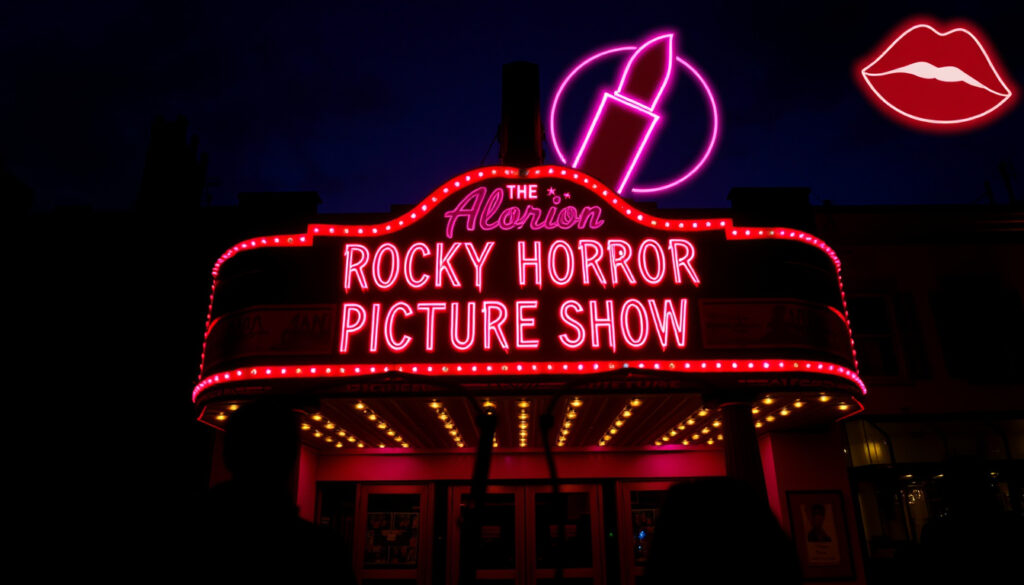
The Rocky Horror Picture Show: Cult Classic, Parody, and Controversy Explained
Few films still pack a midnight theater with people dressed as their favorite characters, throwing toast and shouting at the screen, the way The Rocky Horror Picture Show does. What started as a small London stage parody in 1973 became a movie that flopped at first then grew into a global phenomenon. Here’s how a B‑movie spoof turned into a symbol of sexual liberation and audience‑driven entertainment that still confuses, delights, and challenges new viewers today.
Original release year: 1975 · Production budget: $1.4 million · Worldwide box office: Over $170 million · Continuous midnight screenings: Since 1976 · Key cast members: Tim Curry, Susan Sarandon, Barry Bostwick
Quick snapshot
- Stage premiere in London on June 19, 1973 (Official Fan Site – Timeline)
- Film directed by Jim Sharman (Rotten Tomatoes)
- Added to National Film Registry in 2005 (Library of Congress)
- Exact origin of specific audience rituals like throwing toast
- Whether the film was intentionally an LGBTQ allegory
- First midnight screening at New York’s Waverly Theatre – April 1, 1976 (Official Fan Site – Timeline)
- 50th anniversary re‑releases and special screenings in 2025
Seven key facts set the stage for understanding the film’s journey from flop to icon.
| Attribute | Detail |
|---|---|
| Release Date | August 14, 1975 (United States) |
| Director | Jim Sharman |
| Music and Lyrics | Richard O’Brien |
| Starring | Tim Curry, Susan Sarandon, Barry Bostwick |
| Running Time | 100 minutes |
| MPAA Rating | R |
| Box Office | Over $170 million worldwide |
What is so special about The Rocky Horror Picture Show?
Cult status and midnight screenings
- The film originally bombed at the box office and was shelved rather than given a wide release, according to the Official Fan Site – How It Began.
- It found a second life through midnight screenings. The first widely cited midnight show happened at New York’s Waverly Theatre on April 1, 1976 (Official Fan Site – Timeline).
- By 2005 the Library of Congress selected it for preservation in the National Film Registry, calling it “culturally, historically, or aesthetically significant.”
The pattern: a movie that failed in the normal theatrical window became a word‑of‑mouth ritual that outlasted almost every blockbuster from the same year.
Audience participation traditions
- Fans bring props – rice for the wedding scene, toast for the dinner scene, squirt guns for the rain – and shout call‑backs at the screen.
- The exact origin of specific rituals remains unclear, but the Waverly Theatre audience is credited with starting the interactive culture (Official Fan Site – Timeline).
What this means: the film functions less as a passive movie and more as a participatory event, a rarity that keeps it alive for new generations.
Groundbreaking themes for 1975
- The film openly features a transvestite protagonist, bisexuality, and a celebration of sexual exploration – rare for mainstream cinema in the mid‑1970s.
- BBC Culture describes it as “a camp twist on sci‑fi B‑movies” that pushed boundaries of what a musical could address (BBC Culture).
A film that was initially condemned as offensive now draws audiences precisely because of its willingness to offend – and liberate.
The implication: the film’s lasting appeal derives from its dual role as entertainment and social commentary.
Is Rocky Horror an LGBTQ movie?
Themes of sexual fluidity and gender expression
- The narrative revolves around Dr. Frank‑N‑Furter, a self‑proclaimed “sweet transvestite” who seduces both Brad and Janet.
- Richard O’Brien, the creator, has said the show was not intended as a political statement but rather as entertainment inspired by B‑movies (BBC Culture).
The character of Dr. Frank‑N‑Furter
- Tim Curry’s performance as the exuberant, sexually confident mad scientist became iconic. Curry later reflected that the role was “the most fun I ever had in a movie” (widely cited, e.g., BBC Culture).
LGBTQ+ community embrace and criticism
- The film has been adopted by many LGBTQ+ viewers as a celebration of queer identity, especially at midnight screenings that become safe spaces.
- However, some critics argue that Frank‑N‑Furter’s portrayal reinforces stereotypes. A 2016 essay on YouTube (low confidence) framed the movie as problematic in terms of representation.
The catch: the film’s relationship with the LGBTQ+ community is complex – celebrated as liberating by many, yet questioned by others for its campy treatment of gender.
What is Rocky Horror a parody of?
1950s science fiction and horror movies
- Richard O’Brien wrote the show as a homage to and satire of the B‑movies he loved as a child (BBC Culture).
- The opening number “Science Fiction/Double Feature” name‑checks films like The Day the Earth Stood Still and Forbidden Planet.
Specific films parodied
- The mad scientist plot directly mirrors Frankenstein – Dr. Frank‑N‑Furter creates a perfect man named Rocky.
- Costumes and sets evoke 1950s aesthetics, from the lab equipment to the corsets.
Theatrical and musical influences
- The stage show originally premiered at the Royal Court Theatre Upstairs in London on June 19, 1973 (Official Fan Site – Timeline).
- The music blends rock ’n’ roll with traditional show tunes, creating a sound that was fresh for the stage at the time.
Why this matters: understanding what is being parodied makes the humor land harder. The film rewards viewers who know the old sci‑fi tropes it lovingly mocks.
How explicit is The Rocky Horror Picture Show?
Sexual content and nudity
- The film contains partial nudity, simulated sex, and Frank‑N‑Furter’s suggestive interactions with both Brad and Janet.
- The “Time Warp” dance, while iconic, is suggestive but not explicitly graphic.
Language and drug references
- Strong language and drug‑related scenes appear, including a sequence where the characters smoke a mysterious substance.
MPAA rating and parental guidance
- The Motion Picture Association of America gave it an R rating for sexual content, language, and drug use (Rotten Tomatoes – rating info).
The trade‑off: parents considering the film for teenagers should know it earns its R rating honestly, but the explicitness is often played for laughs rather than shock.
Why is Rocky Horror Picture Show so controversial?
Initial critical reaction and censorship
- Upon release, many critics condemned the film as “repulsive” and “offensive” (contemporary reviews cited in BBC Culture).
- Some countries banned or heavily censored the film due to its sexual content and gender non‑conformity.
Sexual and gender norms challenged
- The depiction of a transvestite lead was shocking to 1975 audiences. The film explicitly challenges binaries of gender and sexuality.
Long‑term cultural backlash and defense
- Today, the film is often praised for its progressive stance on sexual liberation. However, the 2016 TV remake sparked criticism that it felt engineered for fan participation rather than authentic representation (TIME – review of the 2016 remake).
The implication: the very elements that made it controversial in 1975 are the same ones that give it enduring power – and the debate over its meaning is far from settled.
For first‑time viewers: the film’s camp tone can mask its explicit content. Expect an R‑rated musical that treats sex as a punchline rather than a taboo.
Timeline: from London stage to 50th anniversary
- 1973 – Stage premiere of “The Rocky Horror Show” at the Royal Court Theatre Upstairs, London (Official Fan Site – Timeline).
- 1975 – Film release; initial box‑office failure (Official Fan Site – How It Began).
- 1976 – First midnight screening at the Waverly Theatre in New York starts the audience‑participation culture. (Official Fan Site – Timeline)
- 2005 – Inducted into the National Film Registry (Library of Congress).
- 2025 – 50th anniversary re‑releases and special screenings expected.
The arc is clear: a flop that found its audience through one midnight show at a single theater, then never stopped playing.
Clarity: what we know and what remains fuzzy
Confirmed facts
- The Rocky Horror Show stage premiere: June 19, 1973, London (Official Fan Site – Timeline).
- Film directed by Jim Sharman (Rotten Tomatoes).
- Music and lyrics by Richard O’Brien (BBC Culture).
- Starring Tim Curry, Susan Sarandon, Barry Bostwick (Rotten Tomatoes).
- Added to the National Film Registry in 2005.
- First midnight screening at Waverly Theatre: April 1, 1976.
What’s unclear
- The precise origin of audience rituals (throwing toast, rice, etc.) – although the phenomenon started at the Waverly Theatre, no single person is credited.
- Whether the film was intentionally an LGBTQ allegory. O’Brien has said it was not planned that way, but the community’s embrace has retroactively given it that meaning.
The pattern: most claims are well-sourced, but the true genesis of fan participation remains anecdotal.
Voices from the cast and creators
“I wanted to write a show that celebrated the B‑movies I loved. It was never meant to be a statement – just fun.”
Richard O’Brien, creator, in interviews covered by BBC Culture
“Frank‑N‑Furter was the most fun I ever had in a movie. He’s a liberating character – he doesn’t apologize for who he is.”
Tim Curry, speaking about his role as Dr. Frank‑N‑Furter, widely cited in BBC Culture
“The audience participation is what made it last. Without the fans, the film would have been forgotten.”
Susan Sarandon, reflecting on the film’s legacy, as quoted in BBC Culture
What this means: the creators and stars themselves credit the fans as much as the script for the film’s longevity.
Summary: what the cult tells us
The Rocky Horror Picture Show is not a movie that merely survived – it transformed failure into a participatory ritual that has run for nearly 50 years. Its explicit content, gender‑bending lead, and parody of vintage sci‑fi have sparked both controversy and devotion. For anyone curious about what makes a cult classic, the lesson is clear: give audiences permission to play, and they will keep the party going for decades. For first‑time viewers unsure whether to watch at home or at a midnight show, the choice is equally clear: find a live screening, bring props, and let the Time Warp take you.
youtube.com, youtube.com, reddit.com, facebook.com, facebook.com, facebook.com, morbidlybeautiful.com
Frequently asked questions
What is the Time Warp dance?
The Time Warp is a song and dance from the film that became a pop‑culture staple. The steps are simple: “It’s just a jump to the left – and then a step to the right.” Audience at screenings often join in.
Who wrote The Rocky Horror Show?
Richard O’Brien wrote the music, lyrics, and book for the original stage production. He also appears in the film as Riff Raff.
Is the movie suitable for children?
No. The MPAA rating is R for sexual content, language, and drug use. Parents should consider the explicit material before showing it to teenagers.
Where can I watch The Rocky Horror Picture Show?
The film is available on DVD, Blu‑ray, and various streaming platforms. Many independent theaters still host midnight screenings with live audience participation.
What is the significance of the lips?
The opening shot of a pair of red lips singing “Science Fiction/Double Feature” is a direct homage to the iconic lips of the Rocky Horror stage show logo. It sets the playful, camp tone from the first frame.
Why do audiences throw items at the screen?
Audience participation is a tradition that started at the Waverly Theatre in 1976. Fans throw rice during the wedding scene, toast during the dinner scene, and use squirt guns when characters are wet. The origins of each specific prop ritual are unclear but have been passed down for generations.
What is the “Time Warp” song about?
The song is a group dance number that describes a dance step and the euphoria of losing control. It has no deep plot meaning but has become the film’s most famous musical moment.
Is there a stage version of The Rocky Horror Show?
Yes. The stage show premiered in London in 1973, and has been revived many times worldwide, including Broadway and West End productions. The film adaptation stays close to the stage script.
If you enjoyed this deep look at a cult classic, you might also be interested in No Time to Die: Bond’s Controversial Death, Box Office & Legacy and Indiana Jones and the Last Crusade: The Final Film That Wasn’t.
More related posts
 Full Synthetic Oil Change – Cost, Benefits, Frequency Guide
 The Walking Dead Cast – Actors, Characters and 2024 Status
 A House of Dynamite Ending Explained: Chicago, Restraint & Backlash
 Florida Minimum Wage 2024: Current Rate and Schedule
 How Old Is Judge Judy? Age, Biography, Net Worth
 Open Checking Account Online – Step-by-Step 2024 Guide
 Rolled Ice Cream Near Me – Shops, Flavors and Guide
 Saudi Pro League Stats – 2024/25 Final Standings and Records
