Oil Price News Today – WTI Brent Surge Amid US-Iran Tensions
Crude oil prices are climbing sharply on Tuesday as geopolitical tensions between the United States and Iran continue to rattle energy markets. West Texas Intermediate (WTI) crude surged to $93.53 per barrel, while Brent crude reached $98.18, driven by heightened risks in the Strait of Hormuz and uncertainty surrounding President Trump’s military posture toward Tehran.
The sharp rally comes amid a volatile session that has seen prices swing between gains and losses as investors parse conflicting signals from Washington and Tehran. Market participants are closely watching developments in the Persian Gulf, where escalating hostilities have raised concerns about potential disruptions to one of the world’s most critical oil shipping lanes.
Recent data from multiple market sources indicates that Brent crude has posted approximately 50% monthly gains—the largest increase since May 2020—underscoring the magnitude of the supply and geopolitical premium currently priced into global energy markets.
What Are Current Oil Prices Today?
Global crude benchmarks are posting significant gains as traders respond to the latest developments in US-Iran tensions. The following table summarizes current pricing across major benchmarks:
Data reflects the most recent available figures from market sources, with prices subject to change due to ongoing volatility in geopolitical risk premiums.
| Benchmark | Current Price | Daily Change | Source |
|---|---|---|---|
| WTI Crude | $93.53 | +2.45% | OilPrice.com |
| Brent Crude | $98.18 | +3.42% | OilPrice.com |
| Dubai | $105.51 | +4.73% | OilPrice.com |
| Murban | $101.51 | +0.65% | OilPrice.com |
| Urals | $117.46 | -2.78% | OilPrice.com |
TradingEconomics data shows Brent crude at $104.690 with a daily decline of 2.51%, reflecting the intraday volatility that has characterized this week’s trading session. Monthly performance figures remain striking, with Brent posting gains of 34.69% and broader crude benchmarks up 43.06% over the past month.
Recent EIA spot data indicates that WTI at Cushing, Oklahoma, has traded between $101.26 and $113.23 in recent sessions, with the most recent reading showing $114.01 per barrel. Oil-price.net reports crude at $112.06, representing a 10.66% increase in its tracked benchmark.
Market Overview
- WTI crude rose $2.24 to $93.53 per barrel, a gain of 2.45%
- Brent crude climbed $3.25 to $98.18 per barrel, up 3.42%
- Dubai benchmark led gains among regional markers with a 4.73% increase
- Urals crude declined 2.78%, showing divergence from Western benchmarks
- Futures charts show peaks near $107-$108 earlier in the tensions, followed by pullbacks to the $97.5-$105 range
What Is the Latest Crude Oil News Today?
The latest wave of crude oil price increases follows an attack on the Kuwaiti oil tanker Al-Salmi near Dubai, which Iran has been accused of carrying out. The strike represents a significant escalation in Tehran’s campaign against regional energy infrastructure and has contributed substantially to the surge in war risk premiums.
US-Iran Tensions and Military Posture
President Trump has signaled potential de-escalation, stating willingness to end US military operations in Iran even if the Strait of Hormuz remains closed, with the stated goal of degrading Iran’s navy and missile capabilities. This signaled openness tempered earlier price surges, particularly after the Iranian President offered conditional peace terms.
However, conflicting signals from Washington have kept markets on edge. US lawmakers rejected proposals for an Iran pullback, a development that boosted war risk premiums and supported price rebounds. Trump has oscillated between escalation threats—including potential strikes on Iranian oil facilities—and overtures toward negotiation.
GCC tanker flows have stalled amid the tensions, with US troop movements and Israeli/Saudi actions such as drone interceptions heightening risks. A closure or disruption of the Strait of Hormuz would significantly strengthen Tehran’s leverage over global oil markets.
Impact on Regional Supplies
The attack on the Al-Salmi tanker is part of a broader pattern of strikes on energy infrastructure that has halted regional supplies and raised concerns about the stability of Gulf shipping routes. The resulting supply disruption premium has been a primary driver of the approximately 50% monthly gains in Brent crude, marking the largest monthly increase since May 2020.
For readers seeking to understand the broader implications of oil price fluctuations, an oil change guide may provide useful context on how energy costs affect consumer and industrial sectors alike.
What Does the Oil Price Chart Show?
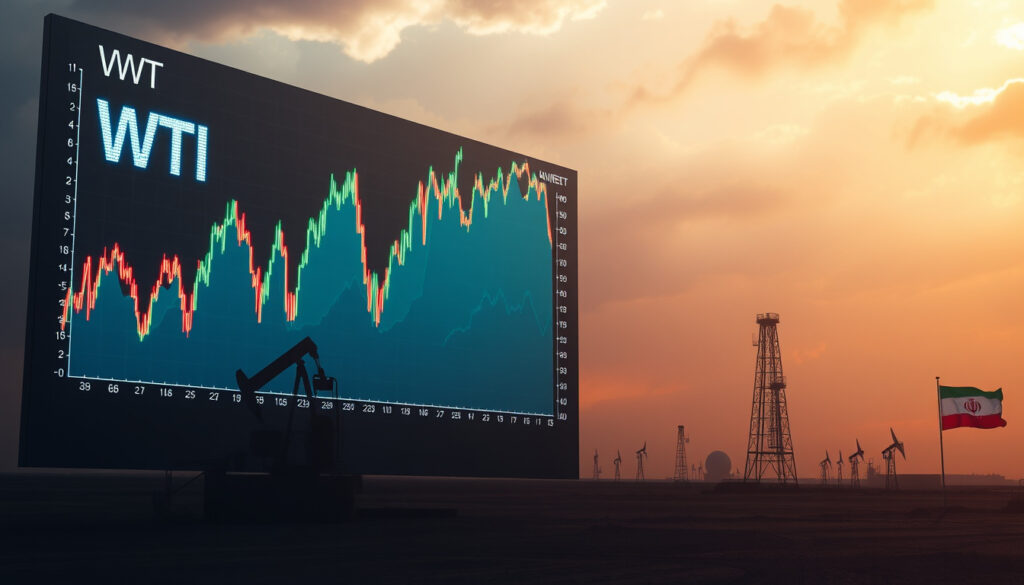
Charts tracking crude oil futures reveal a pattern of sharp movements reflecting the uncertainty surrounding US-Iran negotiations. Peak prices near $107-$108 were recorded earlier in the current round of tensions, followed by pullbacks to the $97.5-$105 range as diplomatic signals shifted.
Historical Context
The current rally has pushed Brent crude to highs not seen since 2022, with March 2026 closing at $104.15, representing a 3.02% decline from prior levels but maintaining significant gains on a monthly and yearly basis. TradingEconomics data shows yearly gains of 39.81% for Brent, with historical records showing a peak of $147.50 per barrel reached in July 2008.
The Oil Price News Today – WTI Brent Surge on Hormuz Blockade report provides additional context on how these historical comparisons inform current market sentiment and trading strategies.
Intraday volatility remains elevated, with prices swinging between gains and losses as new information about diplomatic developments and military movements becomes available. Traders should account for rapid reversals when positioning in crude markets during periods of heightened geopolitical risk.
What Is the Oil Prices Forecast?
Analytical models from TradingEconomics project Brent crude to reach $112.69 by quarter-end, with expectations of continued appreciation to $127.05 over the next twelve months. These forecasts are based on macroeconomic models that incorporate current geopolitical risk premiums and supply-demand dynamics.
Analyst Projections
- Short-term (quarter-end): Brent at $112.69 per barrel
- Medium-term (12 months): Brent at $127.05 per barrel
- Historical comparison: July 2008 high of $147.50 remains the benchmark peak
- Monthly trajectory: 33.97% gain over the past month
- Yearly trajectory: 39.81% gain over the past twelve months
The accuracy of these forecasts depends heavily on developments in US-Iran negotiations and whether tensions escalate or ease. A resolution of the current standoff could quickly deflate the significant geopolitical risk premium currently embedded in crude prices.
Timeline of Recent Strait of Hormuz Developments
The following chronology outlines key events that have shaped crude oil pricing in recent sessions, illustrating the rapid pace of geopolitical developments affecting energy markets:
- Escalation Phase: Iran launched strikes on regional energy infrastructure, including the Kuwaiti oil tanker Al-Salmi near Dubai, triggering concerns about Strait of Hormuz security
- Peak Tensions: Futures charts showed prices reaching $107-$108 per barrel as markets priced in potential supply disruptions
- Conditional Offer: The Iranian President offered conditional peace terms, prompting a partial retreat in prices to the $97.5-$105 range
- Congressional Response: US lawmakers rejected proposals for an Iran pullback, boosting war risk premiums and supporting price rebounds
- Trump Signals: President Trump indicated willingness to end military operations while maintaining pressure on Iran’s navy and missile capabilities
- Current Session: Prices have rallied to current levels with WTI at $93.53 and Brent at $98.18 amid continued uncertainty
What Is Certain and What Remains Unclear?
Market participants and analysts have identified several areas of established fact alongside significant uncertainties that continue to drive volatility in crude oil markets:
| Established Information | Uncertainties |
|---|---|
| WTI crude at $93.53 (+2.45%), Brent at $98.18 (+3.42%) | Duration and outcome of US-Iran negotiations |
| Iranian attack on Kuwaiti tanker Al-Salmi near Dubai | Potential escalation or de-escalation of military actions |
| Approximately 50% monthly Brent gains since May 2020 | Future trajectory of geopolitical risk premiums |
| President Trump signaled potential de-escalation | Impact of social media and news cycles on intraday price swings |
| Strait of Hormuz remains a critical chokepoint | Tanker flow normalization timeline |
Understanding the Strait of Hormuz Context
The Strait of Hormuz represents one of the world’s most critical oil shipping corridors, with approximately 20% of global oil supplies passing through its waters daily. Any threat to freedom of navigation through this passage immediately translates into significant market reaction, as demonstrated by recent price movements.
The strategic importance of the strait gives Iran considerable leverage in any confrontation with Western powers. Tehran has repeatedly hinted at the possibility of blocking or restricting passage through the waterway during periods of heightened tension, a threat that markets cannot afford to discount.
GCC tanker flows have stalled as owners and operators assess the elevated risk environment, with US troop movements and coordinated defensive actions by Israel and Saudi Arabia adding layers of complexity to the regional security picture. Drone interceptions and other incidents demonstrate the active nature of current hostilities beyond verbal statements and diplomatic maneuvering.
Sources and Expert Commentary
The following sources have contributed to the data and context presented in this report, representing primary market data and established news outlets covering energy markets and geopolitics:
President Trump has signaled potential de-escalation, stating willingness to end US military operations in Iran even if the Strait of Hormuz remains closed, focusing on degrading Iran’s navy and missiles; this tempered surges after Iranian President offered conditional peace.
— TradingEconomics commodity analysis
Iran attacked the Kuwaiti oil tanker Al-Salmi near Dubai, escalating strikes on energy infrastructure and halting regional supplies, contributing to ~50% monthly Brent gains—the largest since May 2020.
— TradingEconomics commodity analysis
- OilPrice.com — Live price charts and market data
- TradingEconomics — Brent crude analysis and forecasts
- U.S. Energy Information Administration — Spot price data
- Oil-price.net — Tracked benchmark data
Summary
Crude oil prices are trading significantly higher on Tuesday, with WTI at $93.53 and Brent at $98.18, as markets continue to digest the implications of US-Iran tensions for global energy supplies. The Strait of Hormuz remains a focal point of concern, with the attack on the Kuwaiti tanker Al-Salmi highlighting the risks to regional infrastructure. Forecasts project Brent reaching $112.69 by quarter-end and $127.05 within twelve months, though these projections depend heavily on whether diplomatic channels produce de-escalation or tensions continue to mount.
Frequently Asked Questions
Why are oil prices surging today?
Oil prices are climbing due to heightened US-Iran tensions, including Iran’s attack on a Kuwaiti tanker near Dubai and concerns about potential disruptions to Strait of Hormuz shipping lanes.
What is the current Brent crude oil price?
Brent crude is currently trading at $98.18 per barrel, up 3.42% from the previous session, according to live market data.
How much have oil prices gained this month?
Brent crude has posted approximately 50% monthly gains, representing the largest monthly increase since May 2020, driven by geopolitical risk premiums related to US-Iran tensions.
What is the oil price forecast?
TradingEconomics projects Brent crude at $112.69 by quarter-end and $127.05 in twelve months, though these forecasts carry significant uncertainty given the volatile geopolitical environment.
What happened to the Kuwaiti oil tanker?
The Kuwaiti oil tanker Al-Salmi was attacked near Dubai by Iran, representing a significant escalation in strikes against regional energy infrastructure and contributing to the current surge in crude prices.
How does the Strait of Hormuz affect oil prices?
The Strait of Hormuz handles approximately 20% of global oil supplies daily. Any threat to passage through this chokepoint immediately translates into higher crude prices as markets price in potential supply disruptions.
What is the historical high for Brent crude?
The all-time high for Brent crude was $147.50 per barrel, reached in July 2008. Current prices remain significantly below this level but have reached the highest points since 2022.
More related posts
 Symptoms of Kidney Infection: Early Signs, Pain, Diagnosis & Treatment
 eBay Customer Service Number: Phone, Chat & Live Support
 How to Zip a File on Windows, Mac, Linux, Android, iOS & Online
 Texans vs Patriots Stats: Head-to-Head Record & 2026 Score
 How to Remove Odors from Fridge Naturally
 What Is the Pink Salt Trick – Viral Trend Facts and Science
 Does Max Die in Stranger Things – Season 4 and 5 Fate Explained
 Is Walmart Open on Christmas Day – 2024 Hours Alternatives
